Lindisfarne, also known as Holy Island, is a tidal island just off the northeast coast of England in Northumberland. Famous for its early Christian heritage, scenery, and wildlife, the island is accessible only at low tide via a causeway that links it to the mainland. Visitors come for its unique mix of history, spirituality, and natural beauty, and I was super excited to visit.
Now whilst I did enjoy it, it was quite disappointing against my expectations. This was largely a result of hordes of crowds, not really that much to see and do on the island, and the extortionate pricing. Don’t get me wrong – I’m glad I visited, but I wouldn’t prioritise it over the other things I did in Northumberland.
- A Brief History of Lindisfarne
- How to get to Lindisfarne
- Things to See & Do on Lindisfarne
- Practical Visitor Tips
A Brief History of Lindisfarne
- AD 635: Lindisfarne was founded by Saint Aidan at the request of King Oswald, becoming probably the most important Christian site in Anglo Saxon England.
- 7th–8th century: The island flourished as a Christian centre; headed up by Saint Cuthbert, known for his deep spirituality.
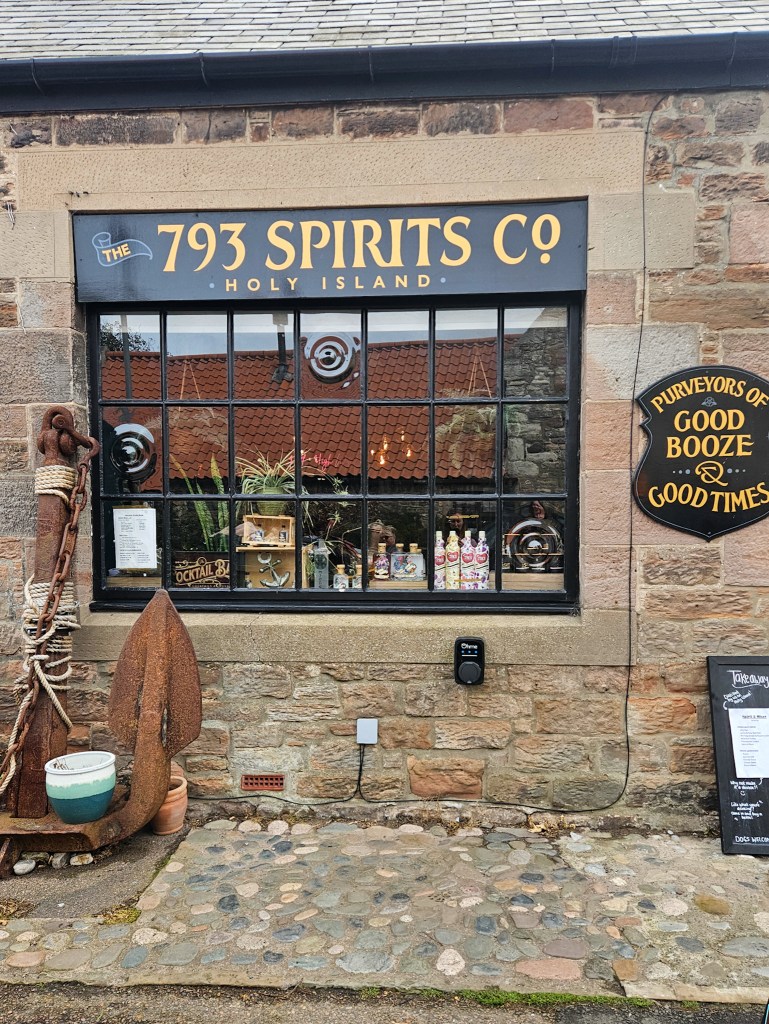
- 793: An infamous Viking raid hit the island; this raid is often cited as the beginning of the Viking Age in Britain. Raids continued for many years, forcing the monks to abandon the monastery in the 9th century.
- 11th century: Monastic life revived on the island when Benedictine monks built a new priory near the original monastery site.
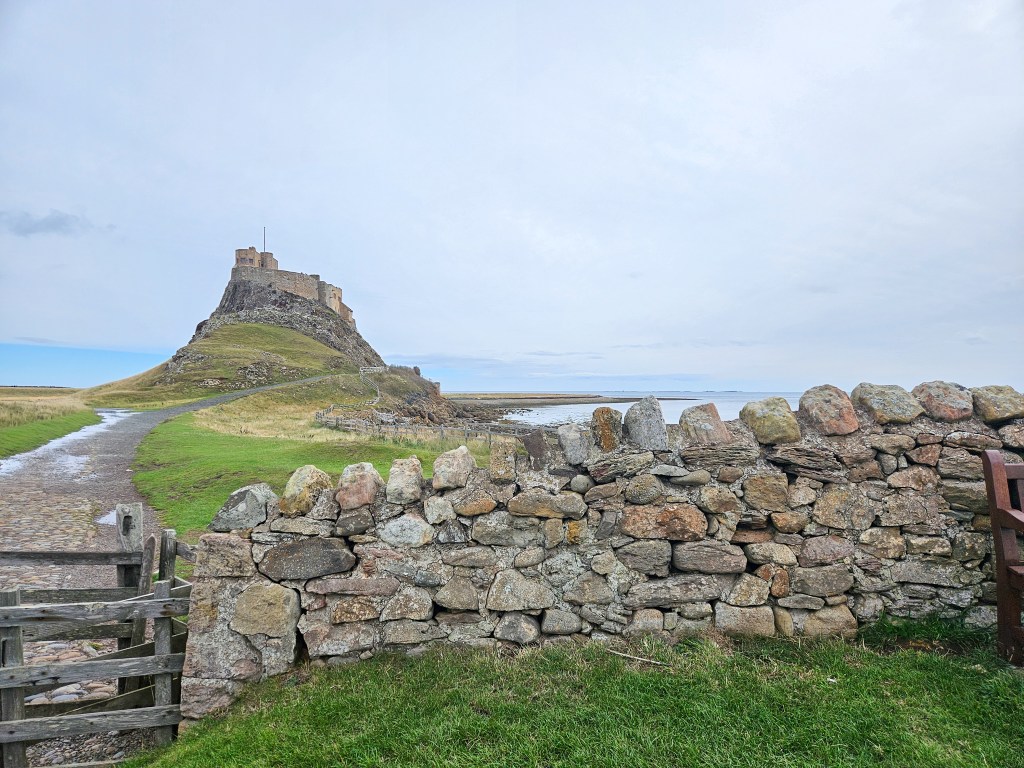
- 16th century: Lindisfarne continued as a place of worship and pilgrimage until the Dissolution of the Monasteries under Henry VIII, when the priory was closed and fell into ruin. Instead, the Tudors built Lindisfarne Castle to guard the coast against Scottish raids.
- 20th century: Architect Sir Edwin Lutyens transformed the castle into a holiday home for Edward Hudson, founder of Country Life magazine.
- Today: The castle, now managed by the National Trust, remains a striking symbol of the island’s layered history. The ruins of the Priory, managed by English Heritage, remain a testament to the island’s religious past.
How to get to Lindisfarne
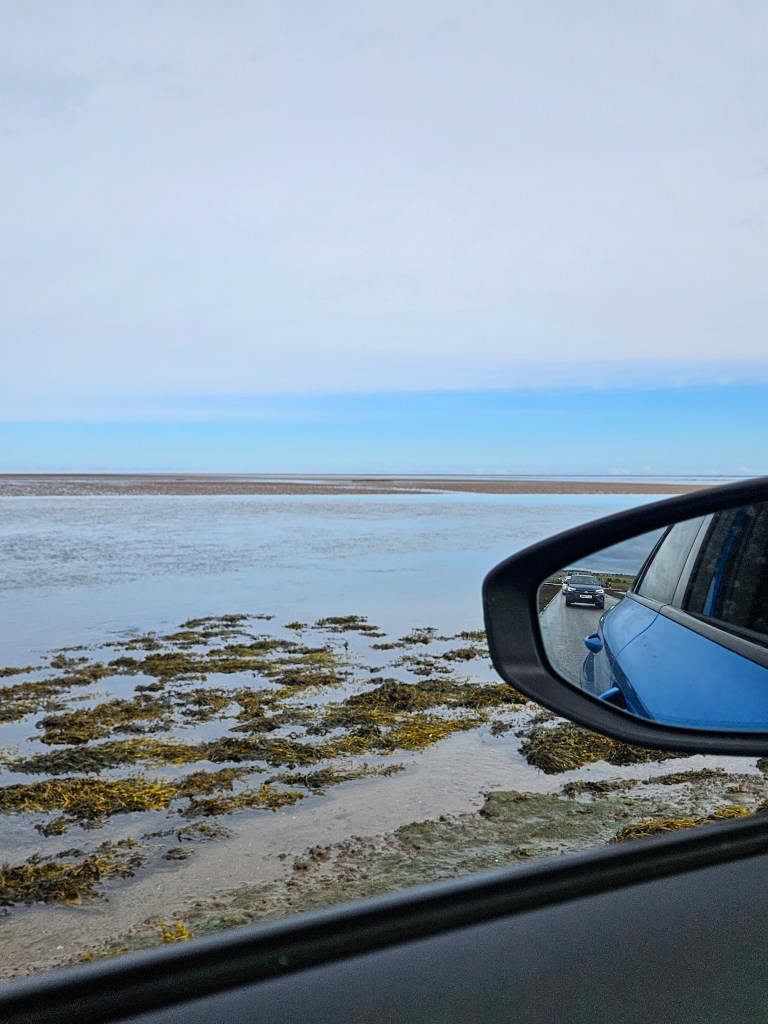
- By Car: From the A1 near Berwick-upon-Tweed, follow signs for Holy Island. Cross the causeway only at safe tide times (check tide tables before traveling at the link below).
- By Train: The nearest station is Berwick-upon-Tweed (on the London–Edinburgh line). From there, take a taxi or bus to the causeway.
- Once on Lindisfarne, parking will cost you £10.50.
Important: The causeway is cut off twice daily by the sea. Never attempt to cross outside safe crossing times (website HERE).

Things to See & Do on Lindisfarne
Lindisfarne Priory
Entrance fee: £11 (free for English Heritage members)
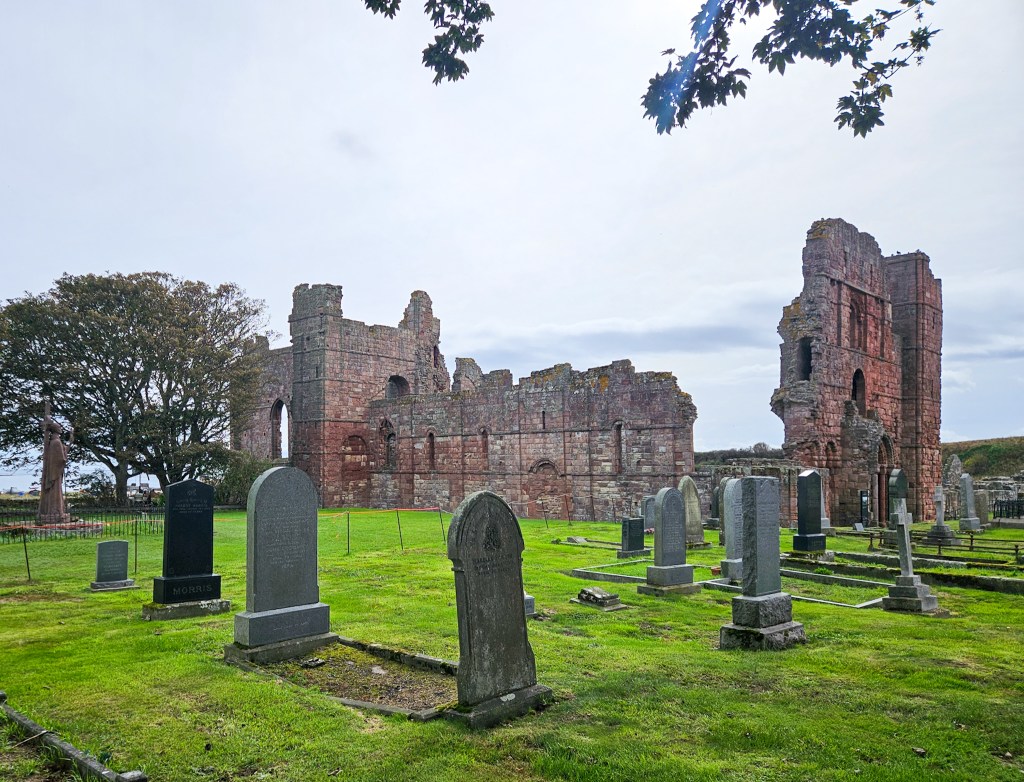
The Priory was founded in AD 635 by Saint Aidan, and was home to a large community of monks. The monastery continued over the ages and the most famous resident monk was Saint Cuthbert, who lead it to being a key site in the spread of Christianity in Anglo-Saxon England. Perhaps the Priory’s most famous item is the Lindisfarne Gospels, an illuminated manuscript created here around AD 700 (these are now in the British Library).
The Priory is now just atmospheric ruins, plus a museum on site explaining the history which is interesting, and managed by English Heritage. It was nice to stroll around the site with views out to the sea.
Lindisfarne Castle
Entrance fee: £12 (free for National Trust members)
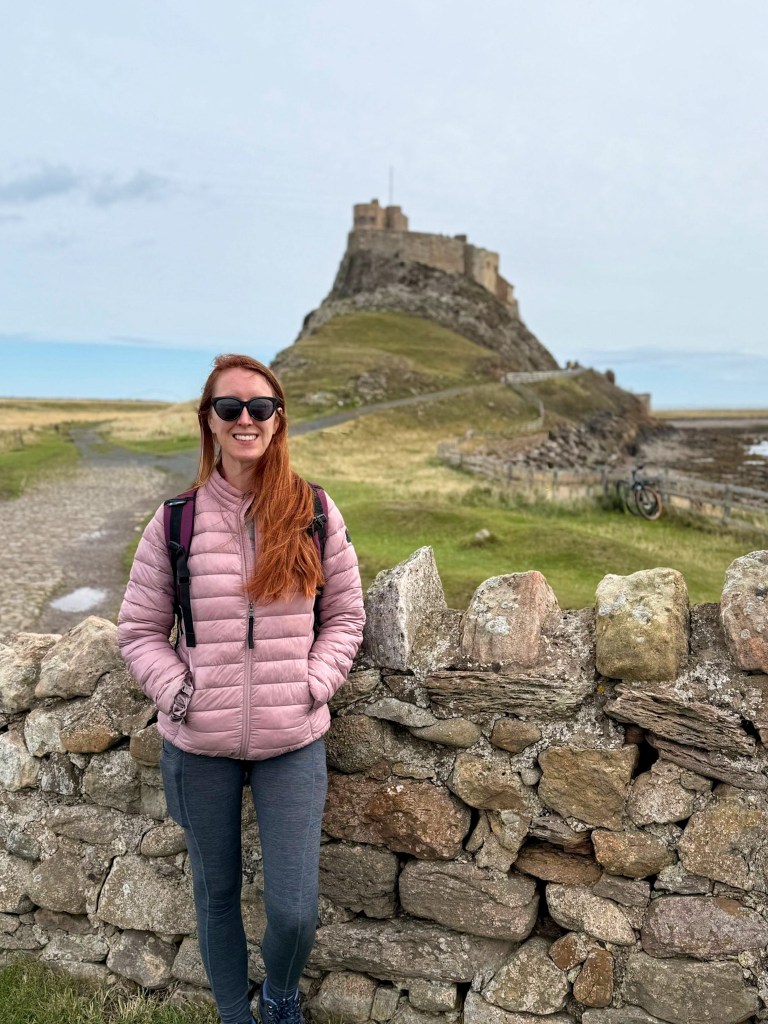
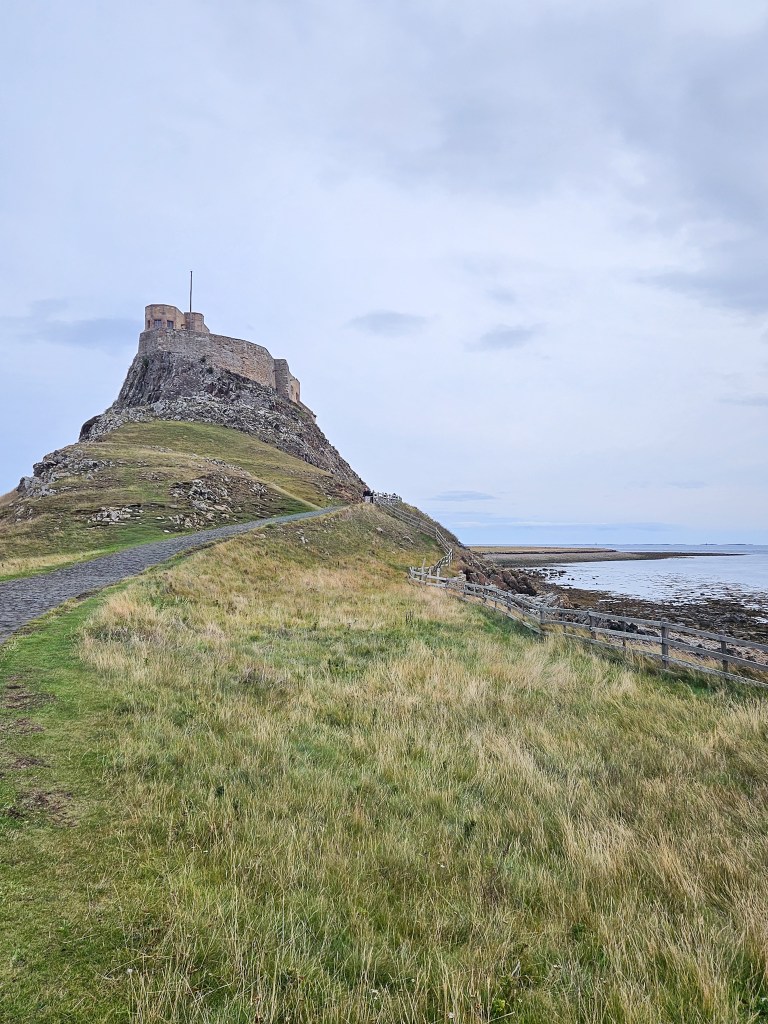
It was really beautiful to walk to the castle along a causeway surrounded by water, and it definitely felt a bit magical. Though in fact, the castle is not really a castle – it’s actually a striking Tudor fort built in 1550, perched on a volcanic mound.
It was later transformed into an Edwardian holiday home by architect Sir Edwin Lutyens in the 1900s. Today, the castle is managed by the National Trust. If I’m honest, there is really not much to see inside; purely a few rooms with some 19th century furniture. It’s also very popular so on my visit felt a bit like feeding time at the zoo with hordes of people. Inside, I’d say it’s one of the poorest National Trust sites I’ve ever visited due to the lack of information and organisation in the castle.
St. Mary’s Parish Church & St Cuthbert’s Island
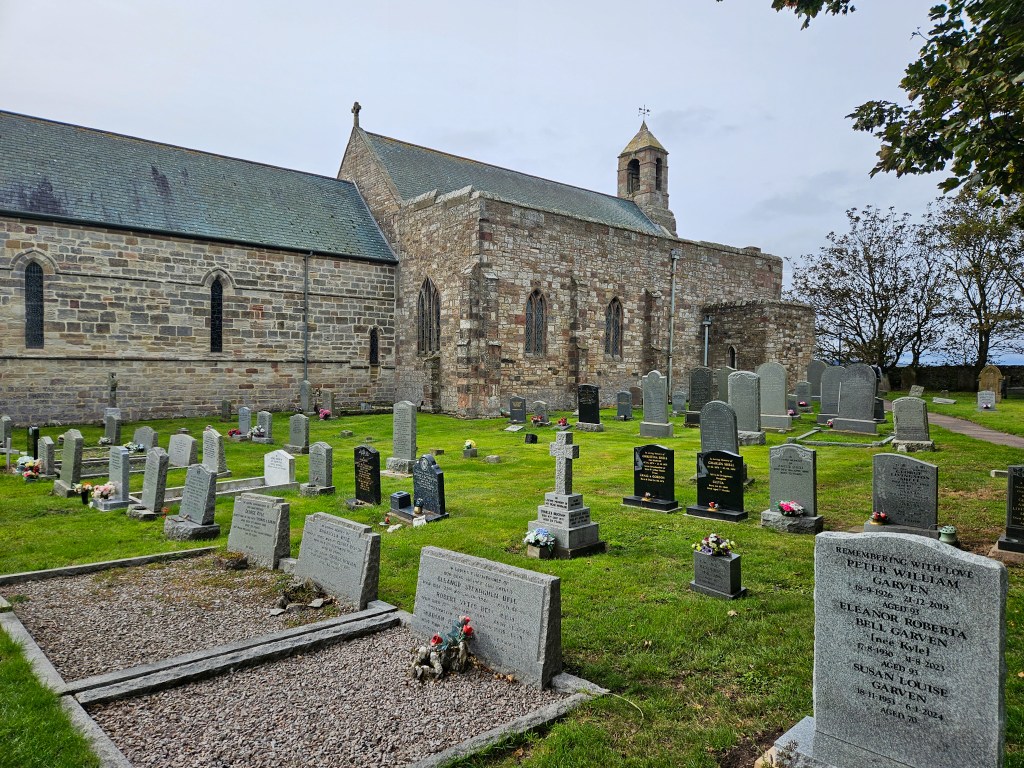
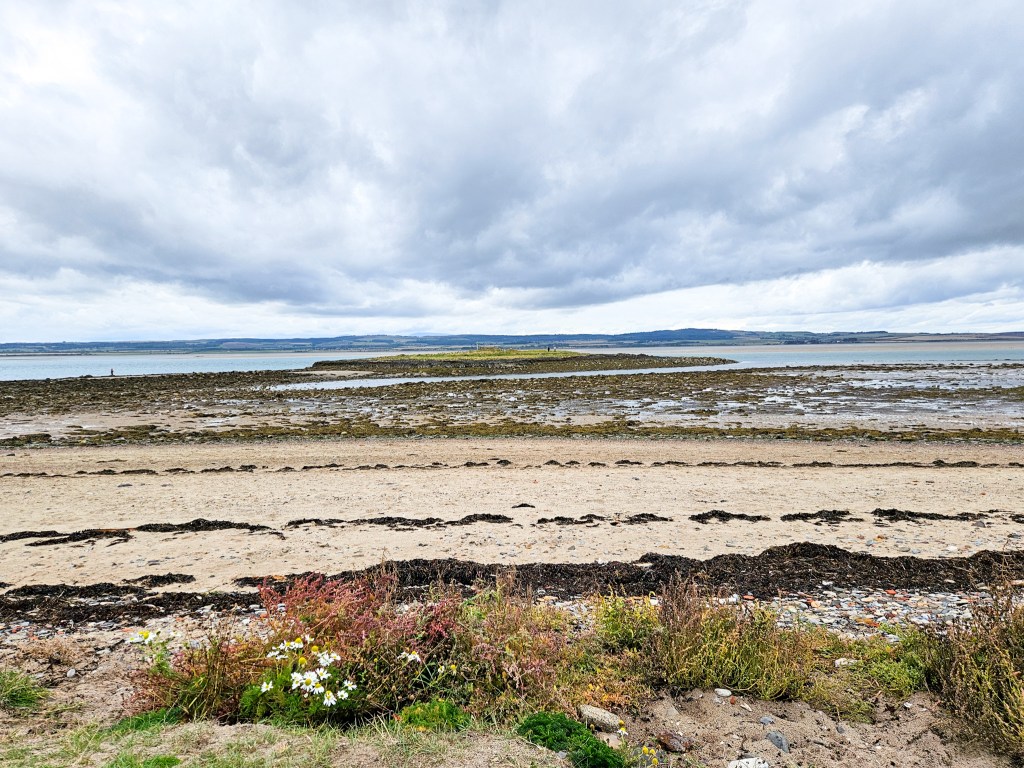
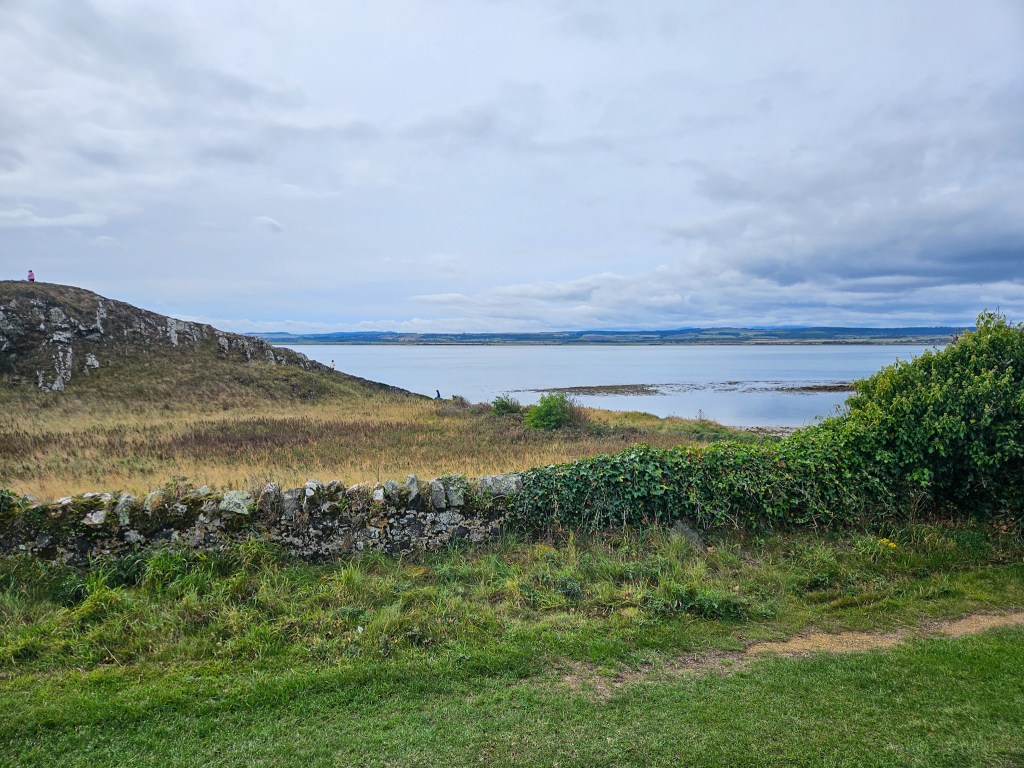
The Parish church sits opposite the priory, and is still an active place of worship for the local community (the island still has many residents). There are also some lovely views out to the sea and across to St Cuthbert’s Island.
Top Tip: Follow the path behind the church to see the island; it’s tiny, with a timber cross in the middle. You can only walk to the island at low tide (around 2-3 hours every day).
Nature & Walking
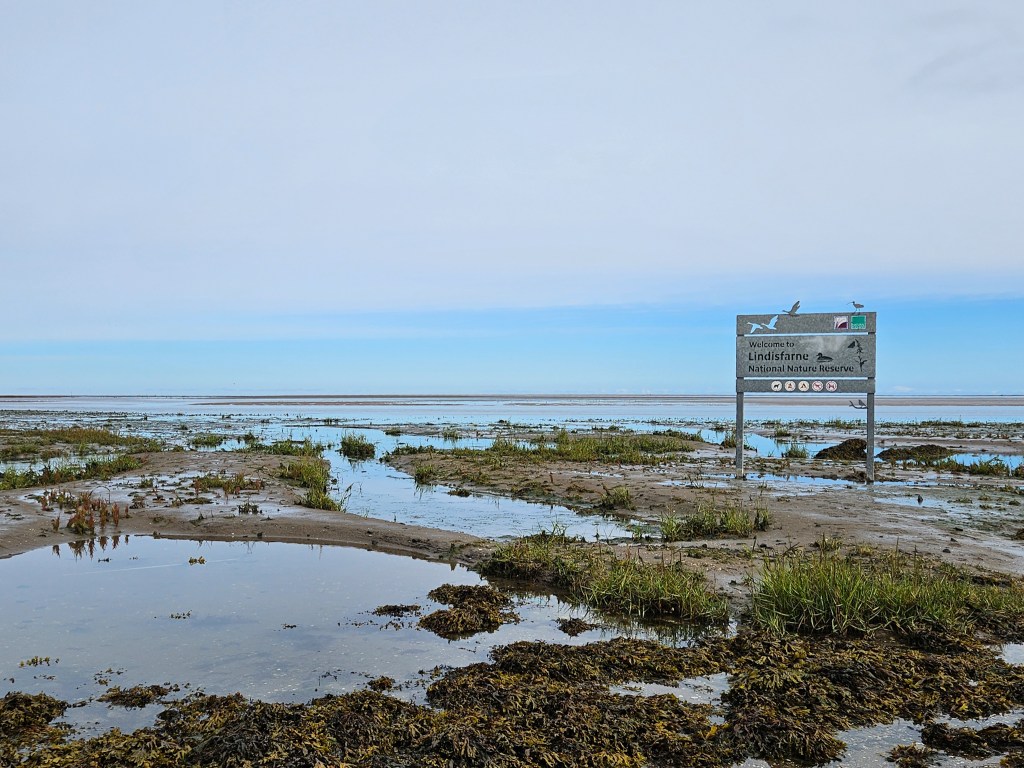
Lindisfarne island is home to the Lindisfarne National Nature Reserve. The Nature Reserve is famous for its thousands of migratory birds, wildflowers, and seals. You’ll find bird sculptures dotting the path, and the island’s beaches, dunes, and saltmarshes make it ideal for walking and spotting wildlife and taking a peaceful stroll. Be warned though, the island is flat and exposed so on a windy day, it’s very cold! We did a short walk around the Reserve and had some lovely views out to sea, but were windswept by the end of it!

Lindisfarne Village & Shops
Lindisfarne is a large island, with many permanent homes and holiday lets. It’s also home to a pub (The Ship Inn), a number of bars and cafes. There are also lots of food stands selling largely fish and chips/seafood, plus multiple gift shops on the island.

Practical Visitor Tips
- Tide Times: Always check tide tables; many visitors get stranded.
- Consider staying overnight: Accommodation is limited (cosy B&Bs, inns, and cottages), but staying overnight allows you to enjoy the island’s tranquillity once day-trippers leave, and leave the island when they arrive (!)
- Best Time to Visit: Spring and autumn for bird migrations, summer for longer walks and warmer weather, winter for dramatic seascapes and solitude.
- Footwear: Wear comfortable shoes as the island is surprisingly big!
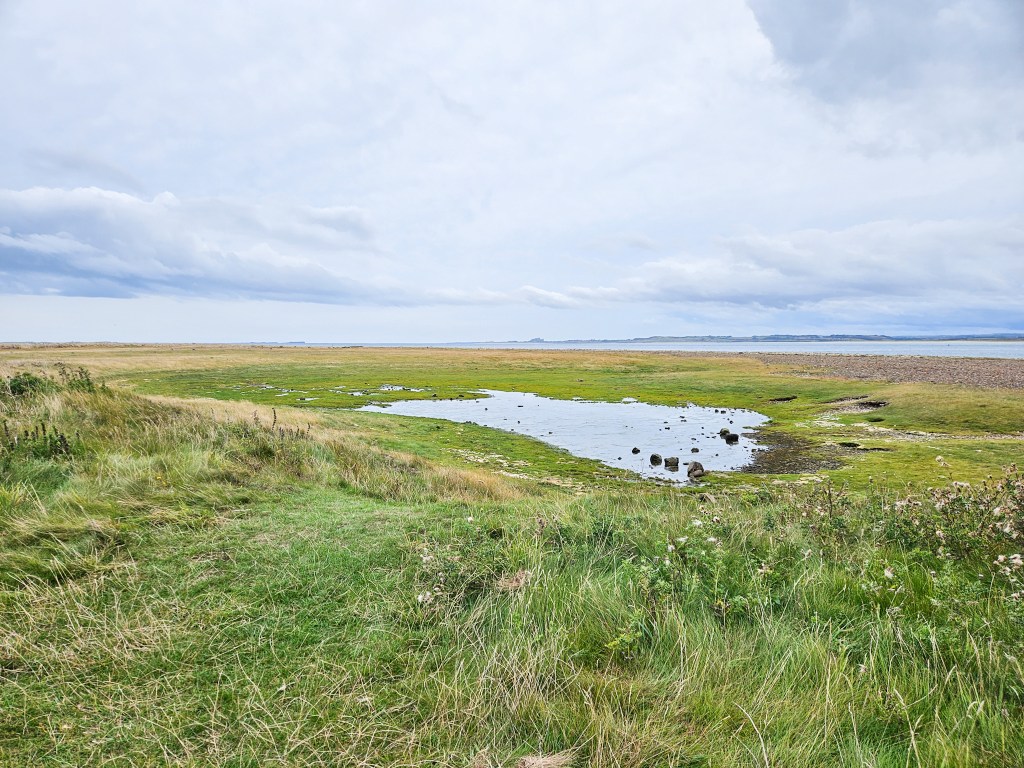

Whilst Lindisfarne did overall disappoint me against my expectations, a visit isn’t just about things to see and do – it’s an experience in and of itself. The ebb and flow of the tides shape life here, and I can see why visitors often describe the island as otherworldly. Whether you’re drawn by its history, wildlife, or peaceful landscapes, Holy Island rewards those who take the time to explore.
What do you think? Let me know your thoughts in the comments. And as always, stay safe and happy travelling!


 Travelling Han
Leave a comment