After 10 days in Vietnam, it was time to cross in to Cambodia and the centrepiece of our South East Asia trip. It’s fair to say that there is nowhere else in the world that I’ve visited that has made me feel as Angkor Wat and the wider Angkor Archaeological Park did. The Park inspires total awe, because not only is this UNESCO World Heritage Site a collection of ancient temples — it’s the spiritual and historical heart of Cambodia. Whether you’re an avid historian, a photographer, or a traveller seeking a once-in-a-lifetime experience, Angkor offers something unforgettable for everyone.
I made the decision not to speed through Angkor. Many people only visit for a day – but I decided to go in depth, with three full days dedicated to the Archaeological Site. It was brilliant, amazing, wonderful. The best part of my entire trip. So here’s a guide on everything you need to know about this amazing place, plus a suggested 1, 2 or 3 day itinerary!
Contents
- Contents
- Important Visitor Information about Angkor Archaeological Park
- The Temples of Angkor Archaeological Park & 3 Day Angkor Itinerary
- Final Travel Tips for Angkor
Important Visitor Information about Angkor Archaeological Park
What is the difference between Angkor Wat and Angkor Archaeological Park?
Firstly, it’s important to say that Angkor Wat and Angkor Archaeological Park are two different (but linked) things. The Park is a huge area, covering around 400 square kilometers, and containing the remains of several ancient capitals of the Khmer Empire (9th – 15th Centuries), across over 72 major temples.
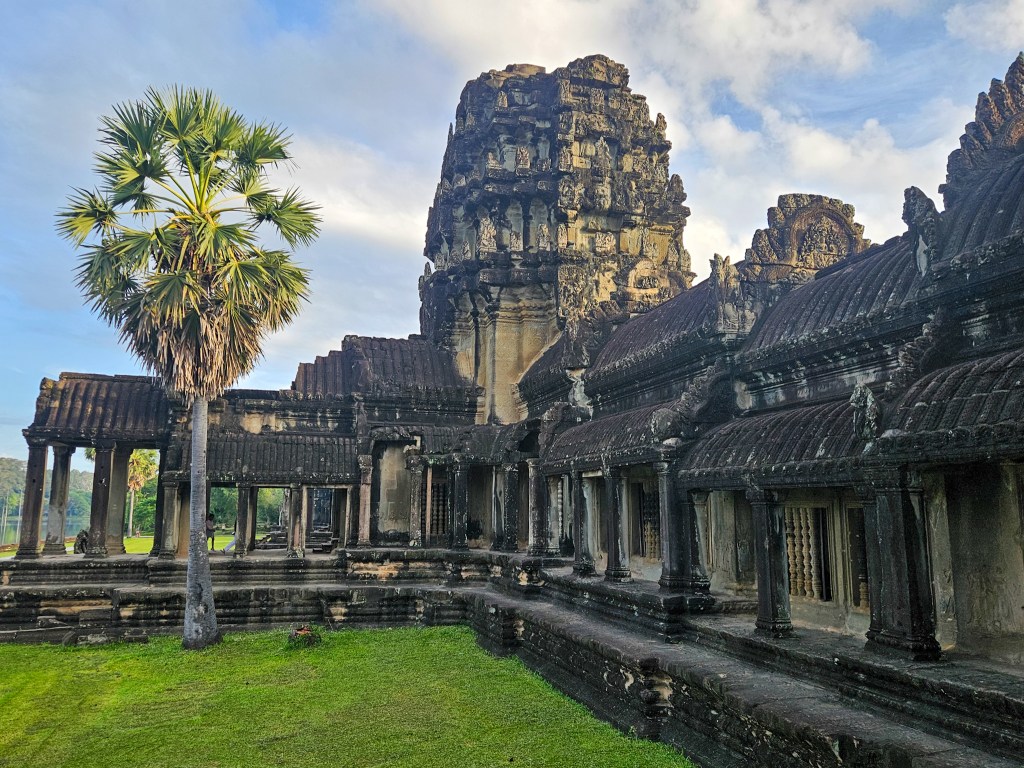
One of those temples is the incredible Angkor Wat, which is the largest religious monument in the world, and the most famous temple within the Angkor Archaeological Park.
Where is Angkor Archaeological Park?
The Park is located just outside Siem Reap, Cambodia, and some of the temples are accessible via Tuk Tuk, others require a car to reach.
You can read my full guide to Siem Reap HERE (post coming soon).
What is the history of Angkor Archaeological Park?
Built between the 9th and 15th centuries, the temples of Angkor were once the center of a vast empire that ruled much of Southeast Asia. Originally dedicated to the Hindu god Vishnu, Angkor Wat later became a Buddhist site — a transformation that reflects Cambodia’s own religious and cultural evolution.
After the fall of the Khmer Empire, the temples were slowly reclaimed by the jungle, hidden for centuries before being rediscovered in the 19th century. Today, Angkor stands as a testament to human creativity, engineering, and spiritual devotion.
How much does visiting Angkor cost?
Tickets can be purchased at the Angkor Enterprise office, a few kilometers from Siem Reap, or online at the official website.
- 1-day pass: $37 USD
- 3-day pass: $62 USD (valid for 10 days)
- 7-day pass: $72 USD (valid for one month)
Tickets cover all the main sites across the Archaeological Park (not just Angkor Wat).
Top Tip: I recommend ordering online, as you have to supply a photo on your ticket, which is easier to upload online. You can then print the tickets off and they are scanned at the entrance to each temple.
When to visit Angkor Wat?
The best time to visit Angkor is during the cool, dry season (November to February) — expect clear skies and comfortable temperatures. This gives the best chance of seeing a magical sunrise or sunset over Angkor Wat temple. In summary:
- November to February: Best time to visit (cool, dry season).
- March to May: Hot season, with fewer crowds but intense heat.
- June to October: Rainy season, ideal for lush greenery and dramatic reflections in temple moats, but rain cannot be ruled out.
How to get around Angkor Archaeological Park?
The park is massive, so plan your transportation ahead:
- Bike: Great for the adventurous (rent in Siem Reap for $2–5/day)
- Tuk-tuk: Most popular and affordable option ($15–25/day with driver)
- Private car or van: Best for families or guided tours
- Electric scooter: Eco-friendly and fun for independent travelers
Top Tip: I booked a 3 day Angkor tour with Cambodia Golden Tours. Day 1 was in a tuk-tuk and days 2 and 3 were by car. Vutha was brilliant – he isn’t a formal guide, but he gave us a great balance of information and ease, with plenty of self exploration. I receive nothing for recommending him, this advice is just a genuine reflection of our great experience.
The Temples of Angkor Archaeological Park & 3 Day Angkor Itinerary
Before I jump in to the itinerary, my experience of Angkor is one of minimal crowds. Aside from the sunrise experience, we largely had every temple we visited to ourselves. We visited in November 2025, during peak season. The conflict with Thailand is impacting people choosing to come here and I really hope it’s resolved soon as it was having a big impact on those who rely on the tourism industry for a living here.
Day 1: Must-See Temples
There are a number of absolute must see temples at Angkor, and if you only have one day, I recommend prioritising these. These are fairly close together and known as the “small loop”, meaning it can be done by tuk-tuk or bike, without the need for a car.
A. Angkor Wat
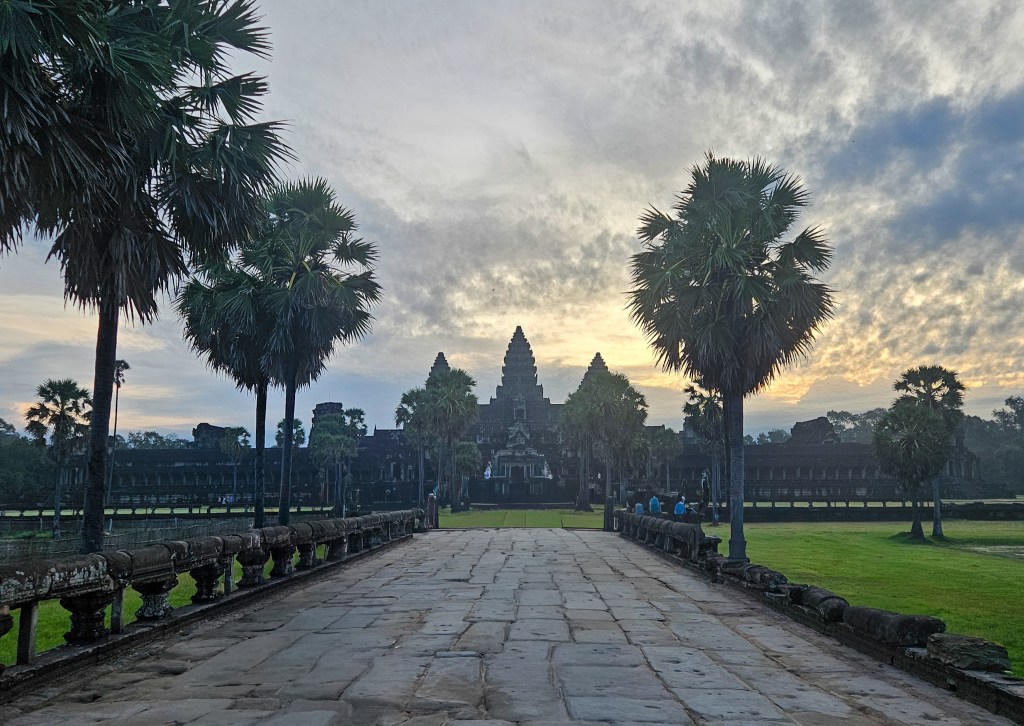
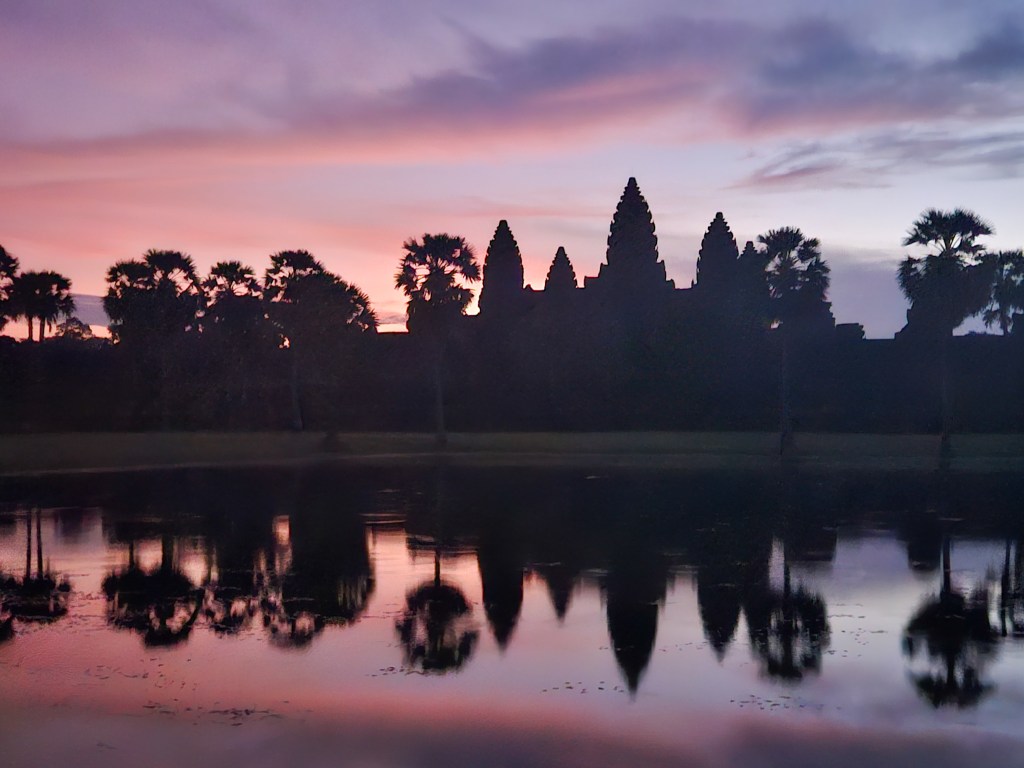
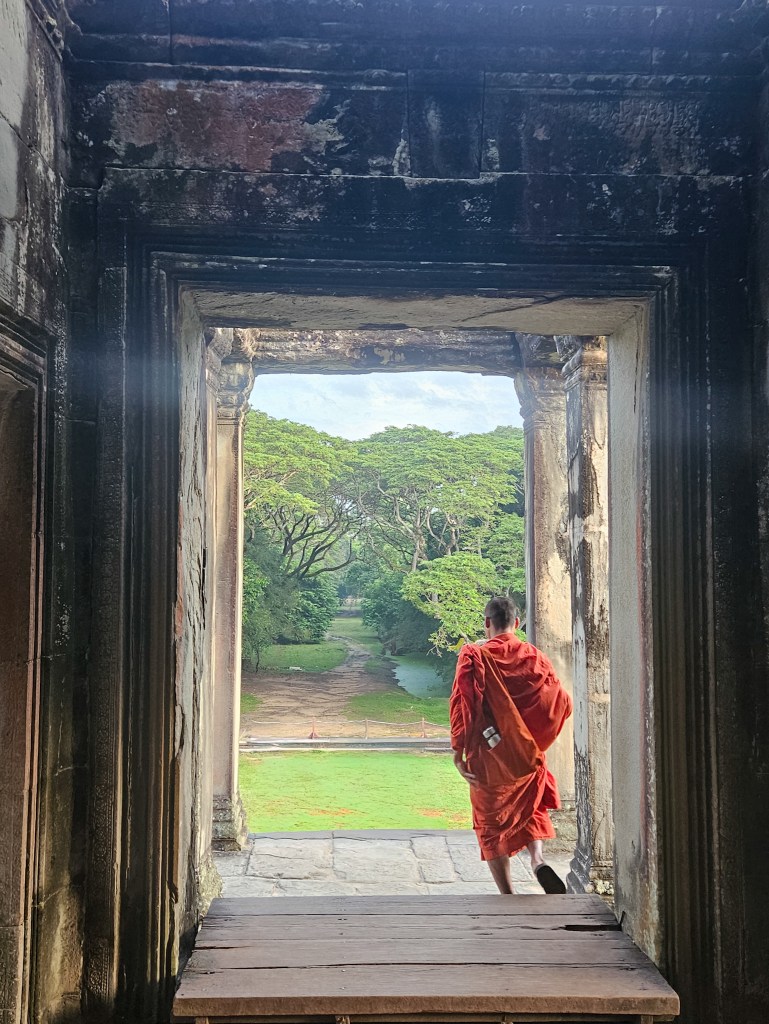
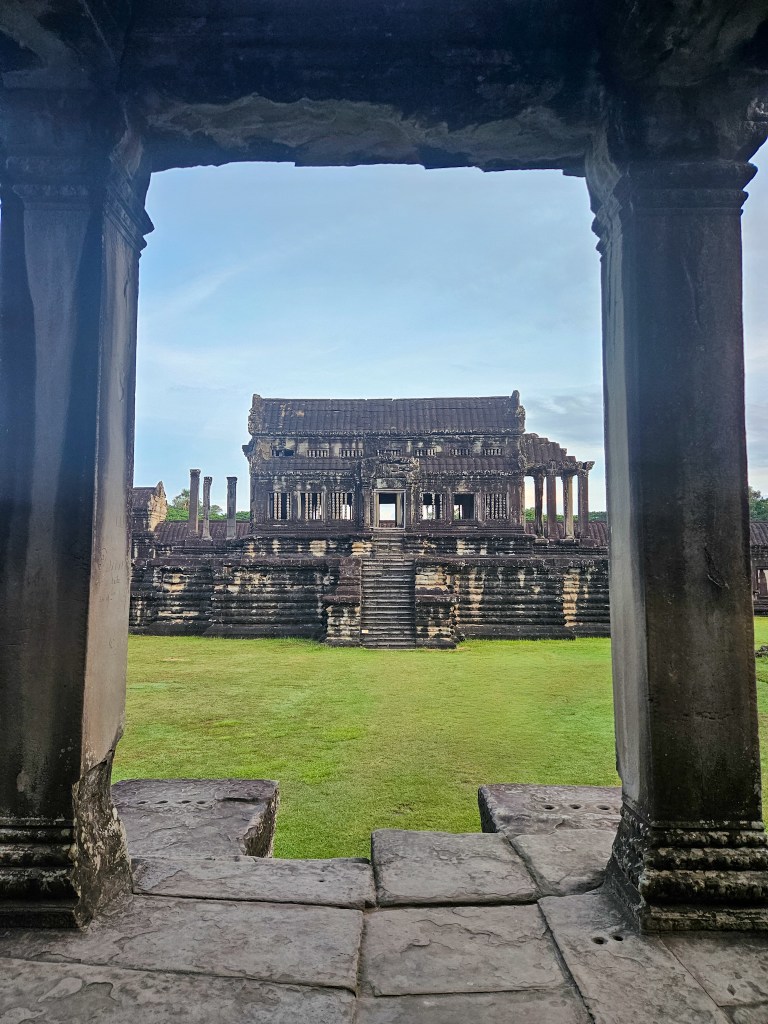
Start your journey here at sunrise (ranges from a 4am-5am pick up from your hotel) — the reflection of the towers in the lotus pond is iconic. Genuinely it was one of the best experiences of my travelling life. Afterwards head inside the temple and explore the many walkways and views. It’s absolutely stunning. In total, aim to spend 2 hours here.
B. Angkor Thom (incl. Bayon, Baphuon & Terrace of the Elephants)
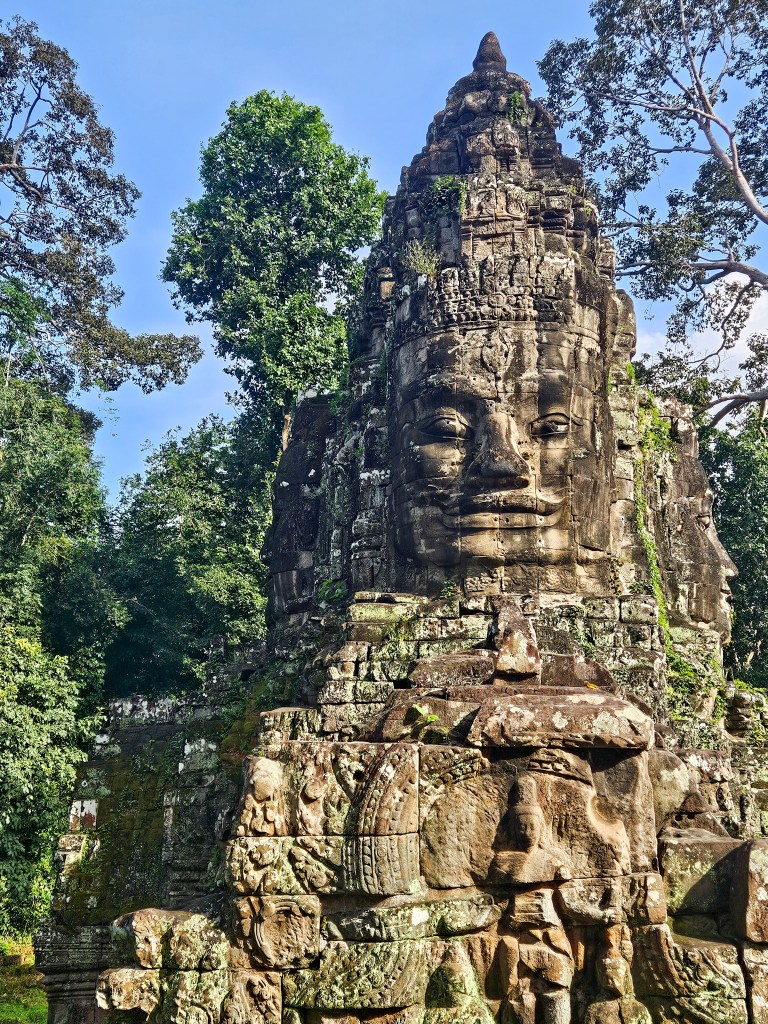
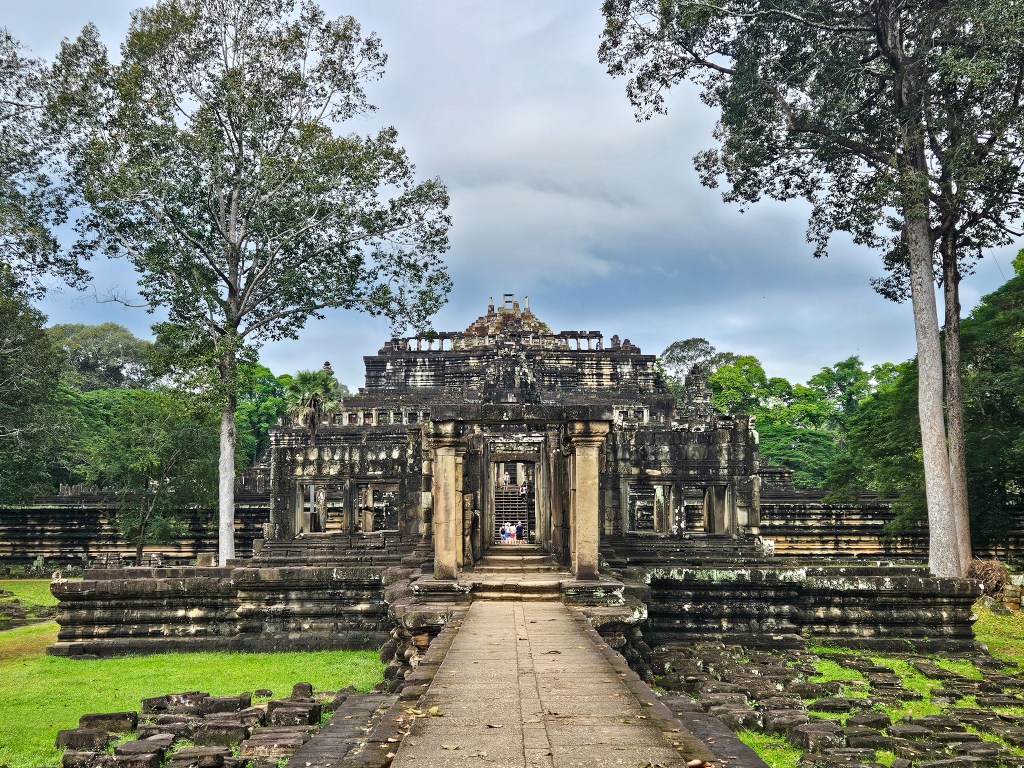
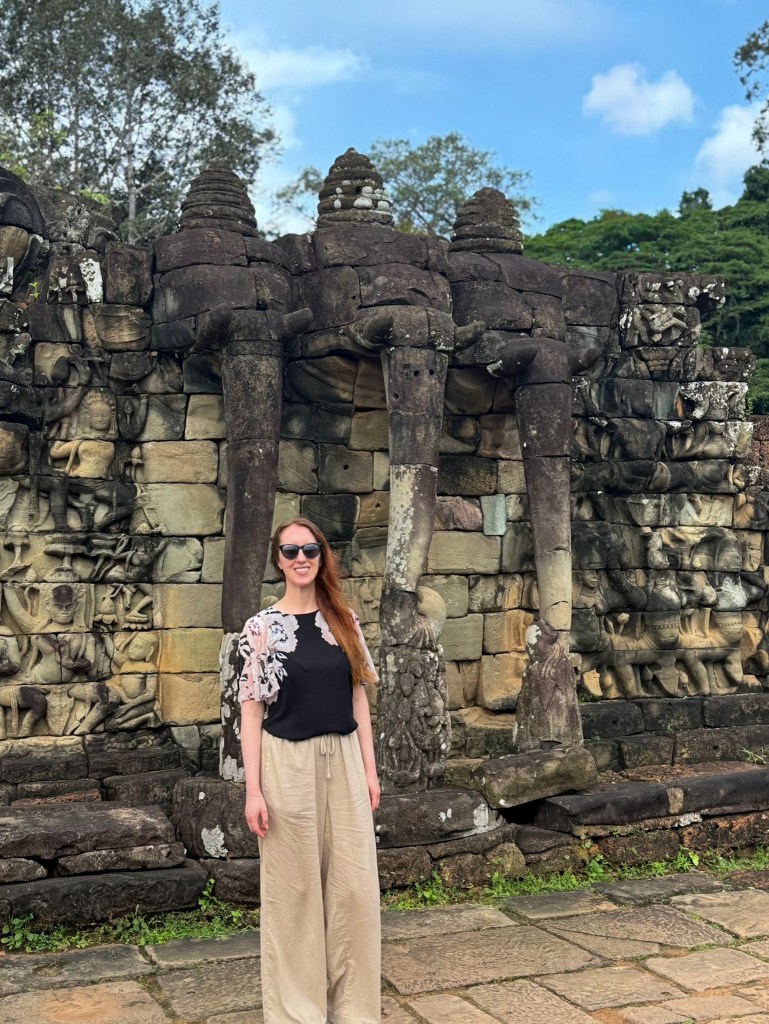
The last great capital of the Khmer Empire, Angkor Thom is actually an area, rather than one individual temple. It’s made up of a number of sites and it is well worth visiting at least a few of them. My hightlights were Bayon Temple, famous for its serene, smiling visages, Baphuon Temple, built on an artifical hill, and the Terrace of the Elephants (I just loved them!). In total, the site is worth 2 hours.
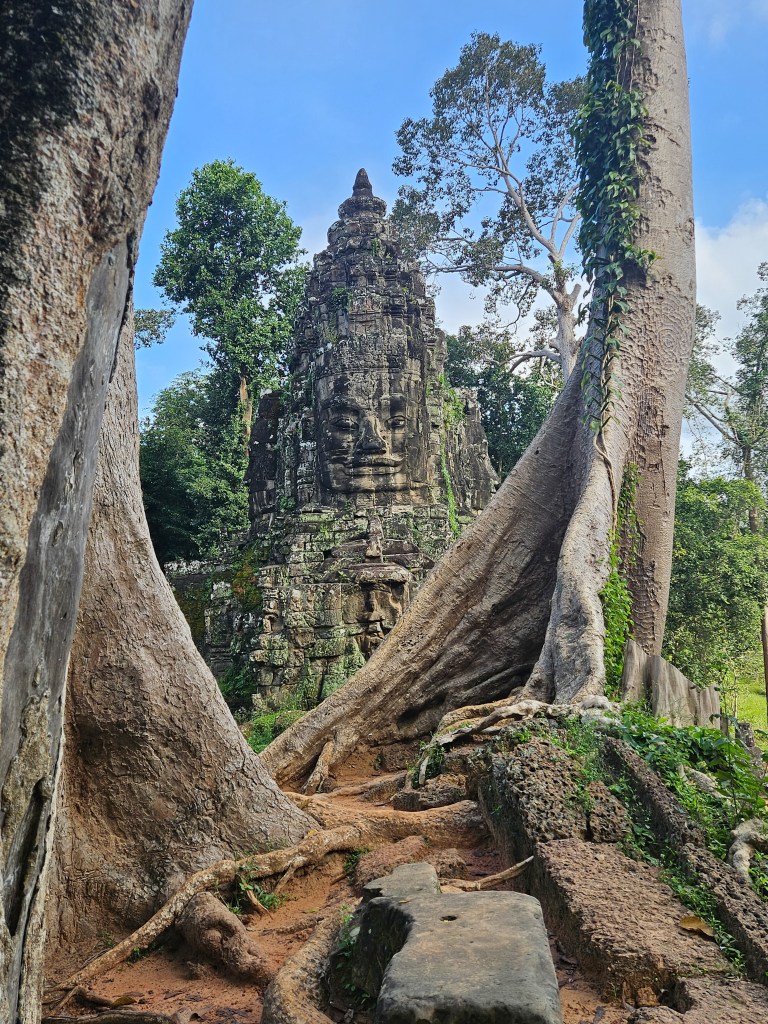
Top Tip: Enter Angkor Thom via the Victory Gate and stop to climb up the stairs – you will see the incredible faces on the side of the gate!
C. Ta Prohm
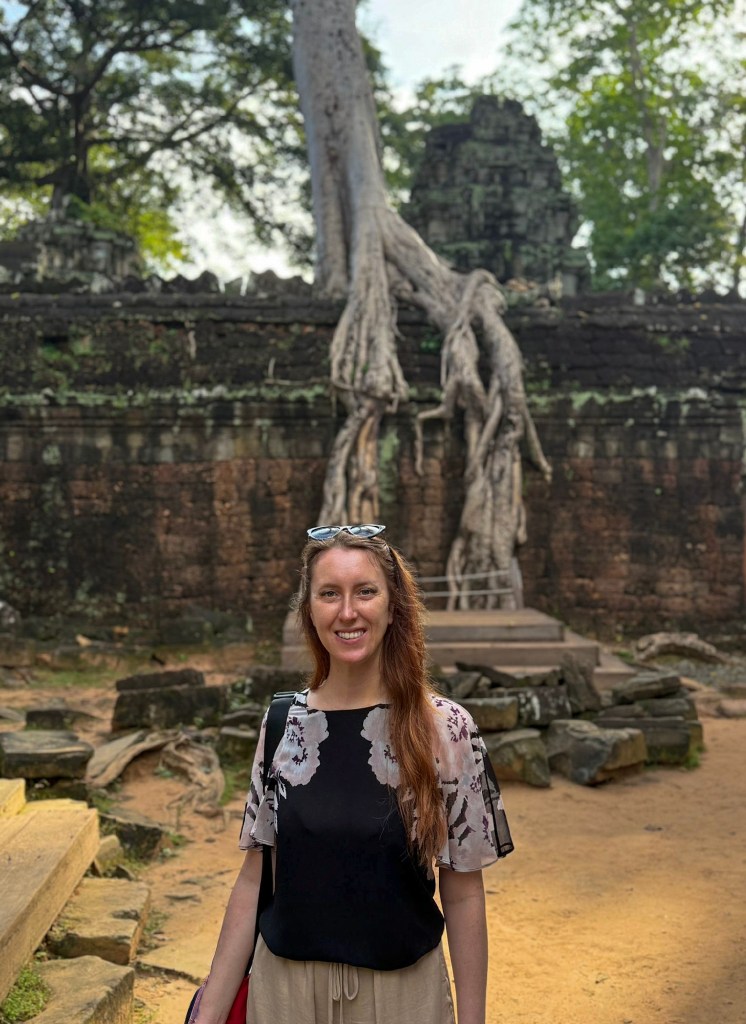
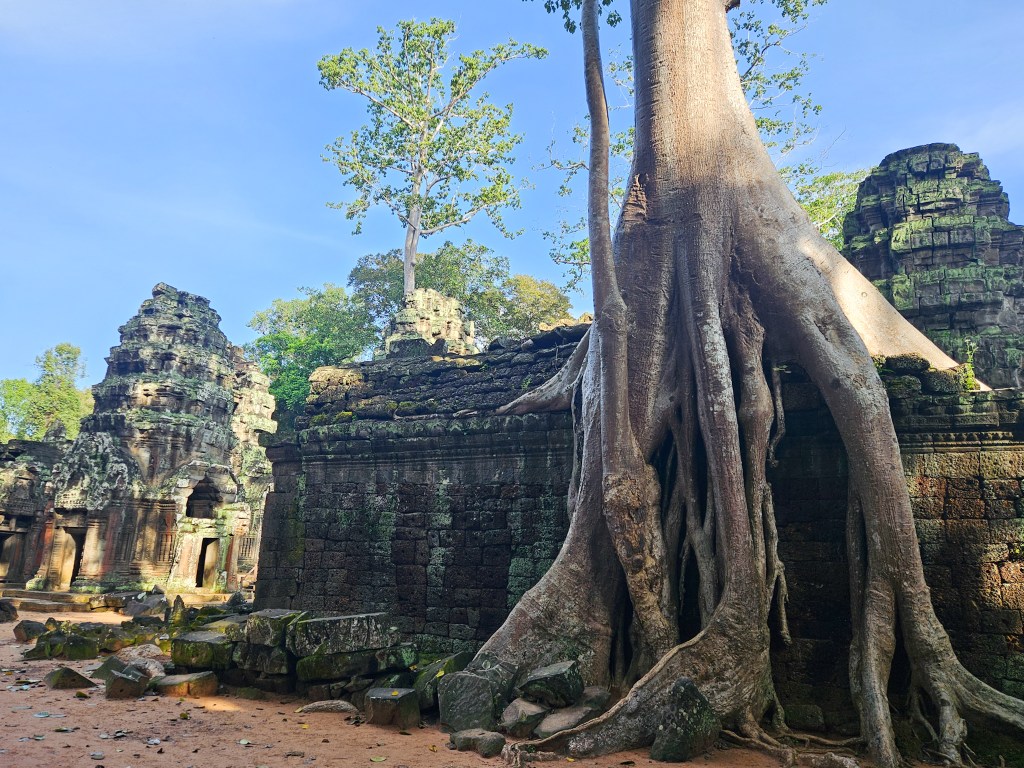
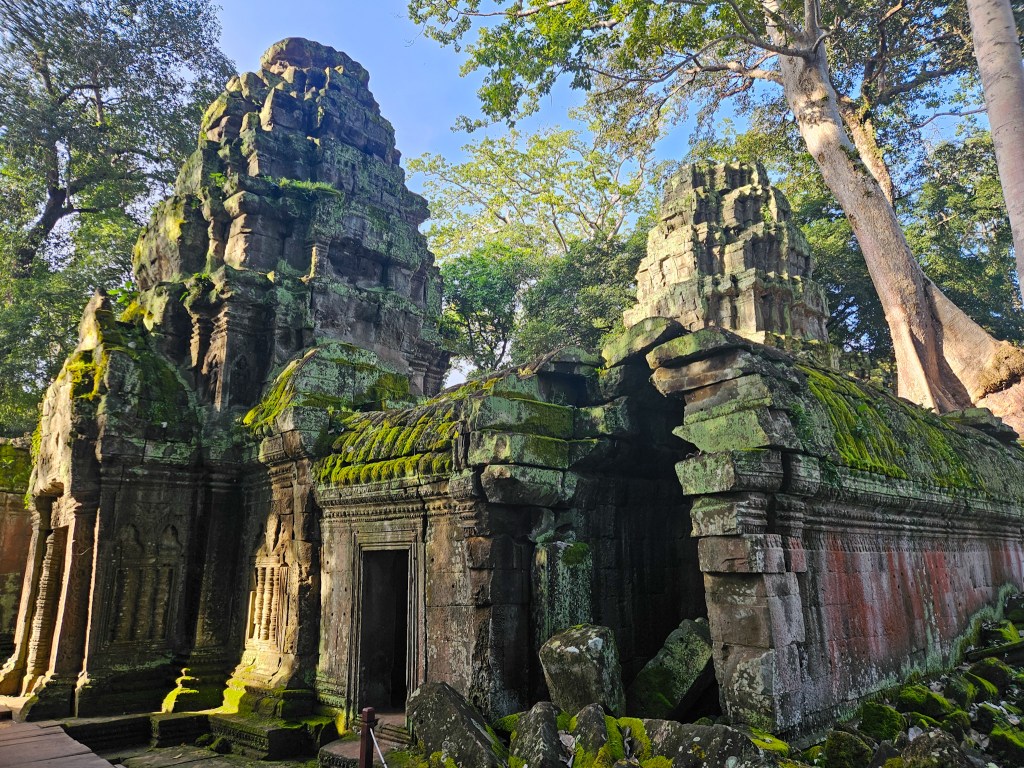
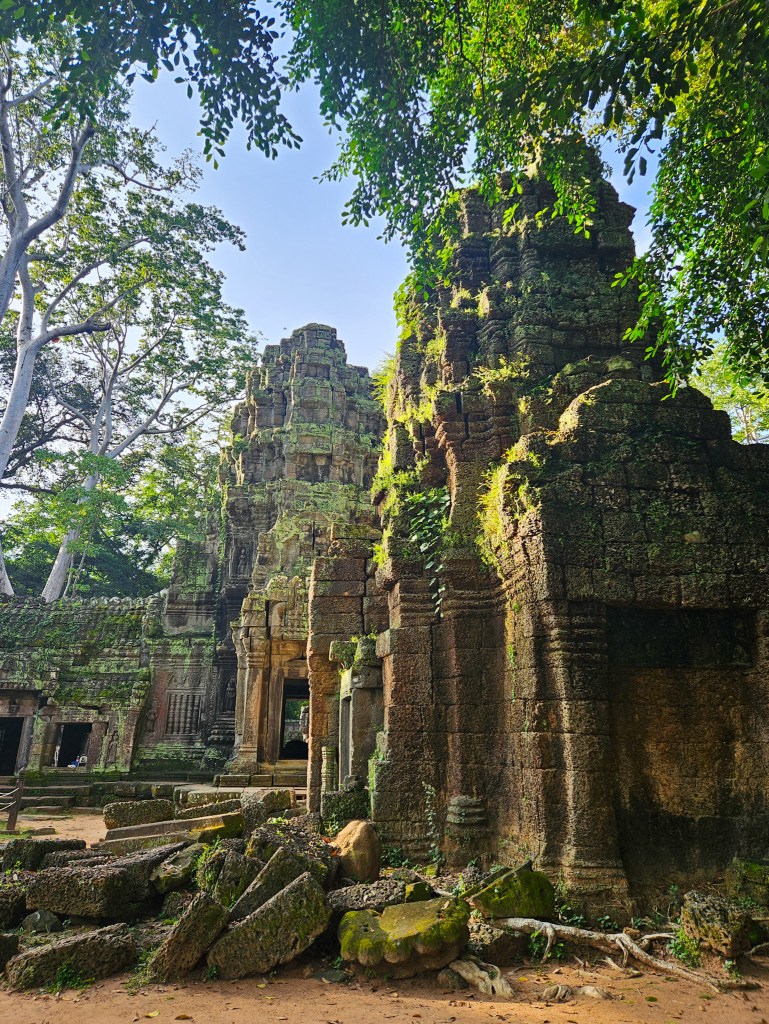
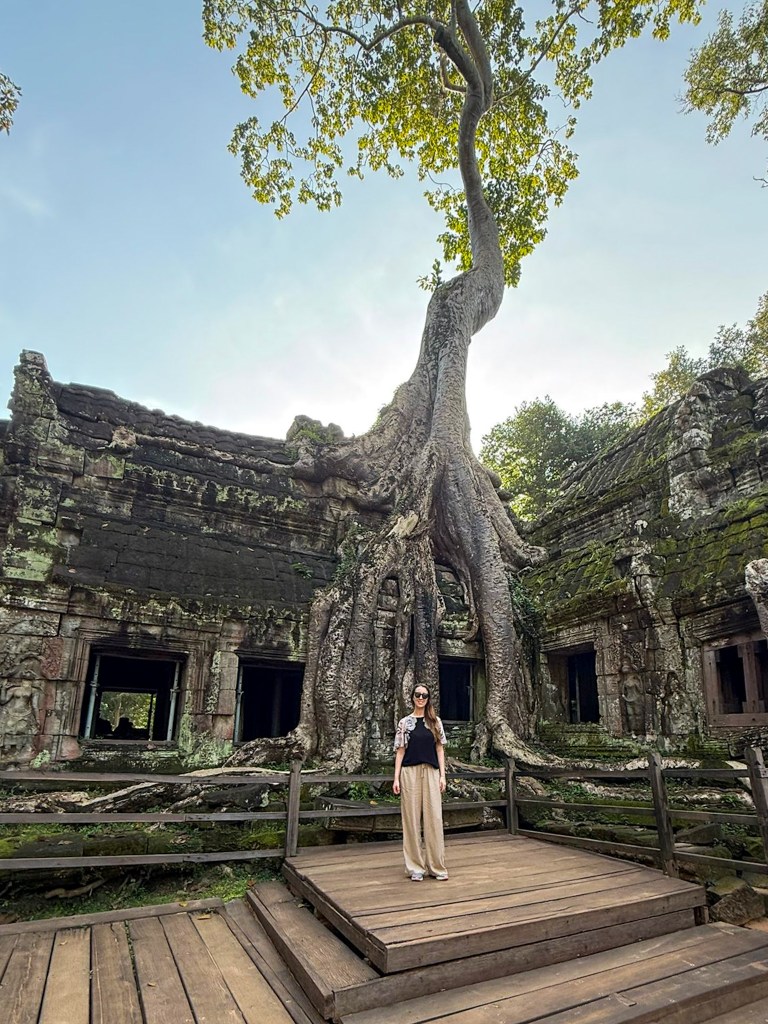
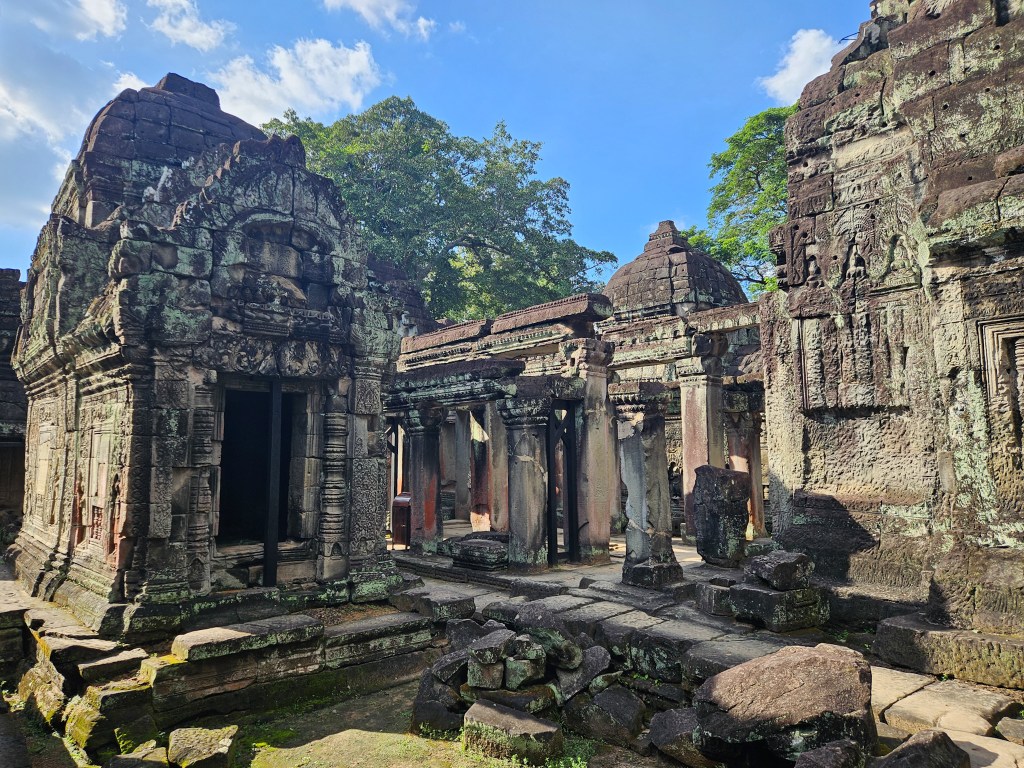
This was my absolute highlight of the entire Angkor trip. Straight out of a film set (actually used to film Tomb Raider), this atmospheric temple is entangled in roots of ancient fig and silk-cotton trees. It honestly feels like stepping into a lost world, and I couldn’t stop saying “wow” around every corner. Aim to spend about 1 hour here.
Day 2: Further Afield Famous Temples
Day 2 takes you in to the “big loop” to see some of the more famous further afield temples. This will require a car to reach, so you will need to hire a driver.
A. Banteay Srei
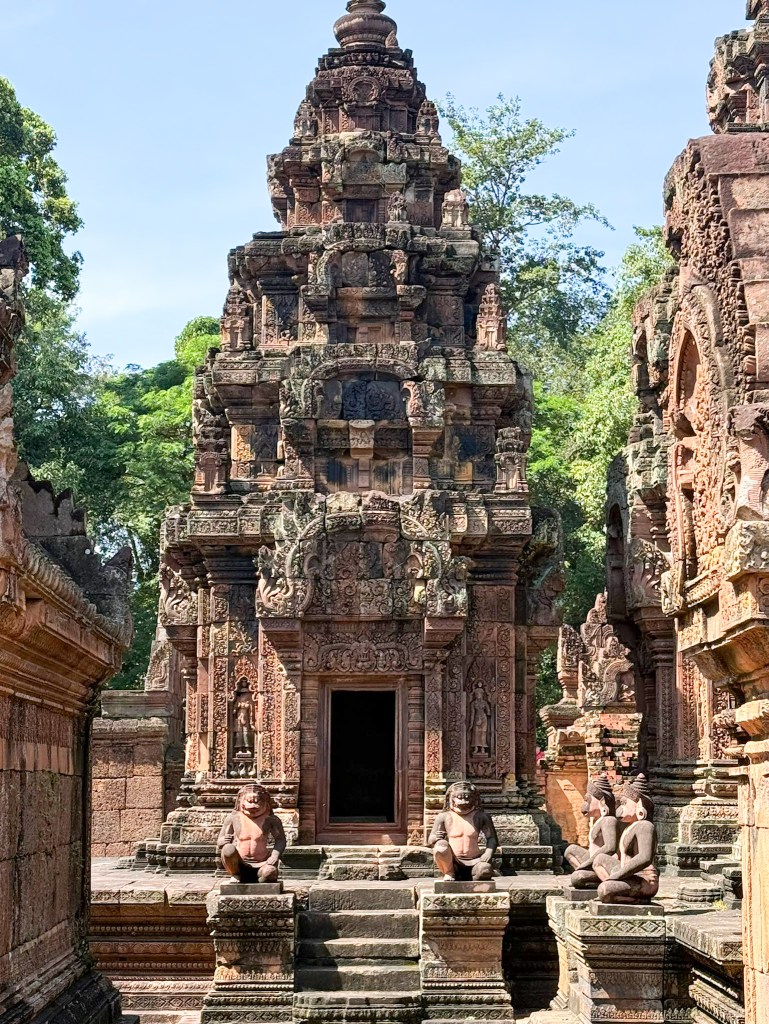
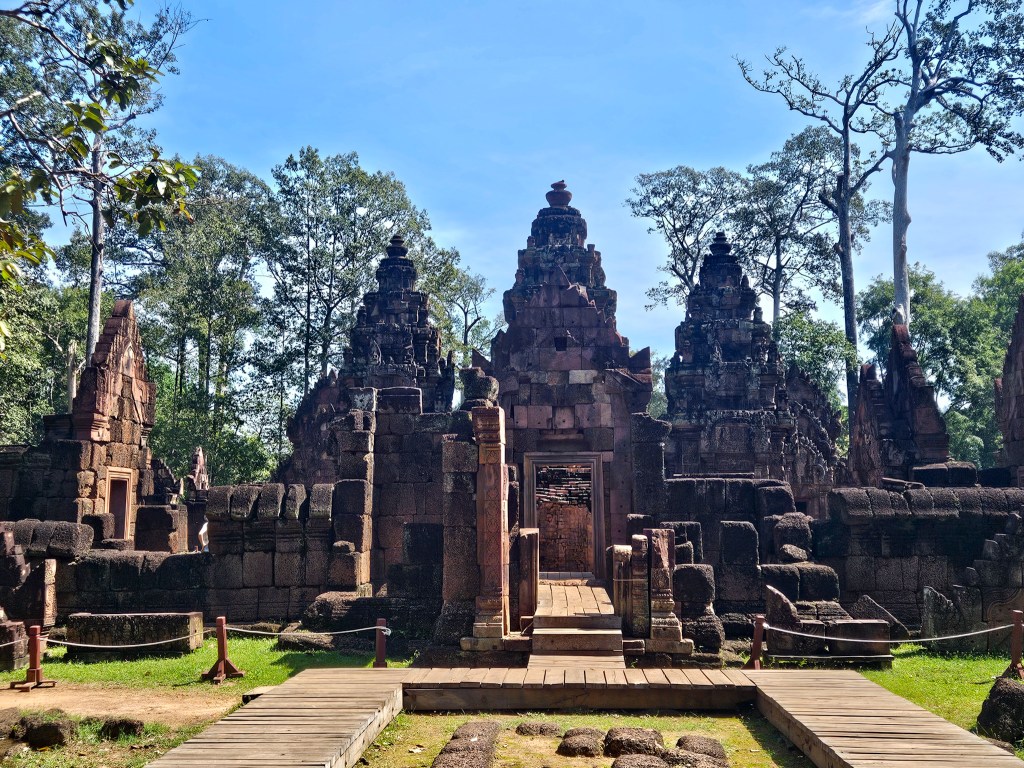
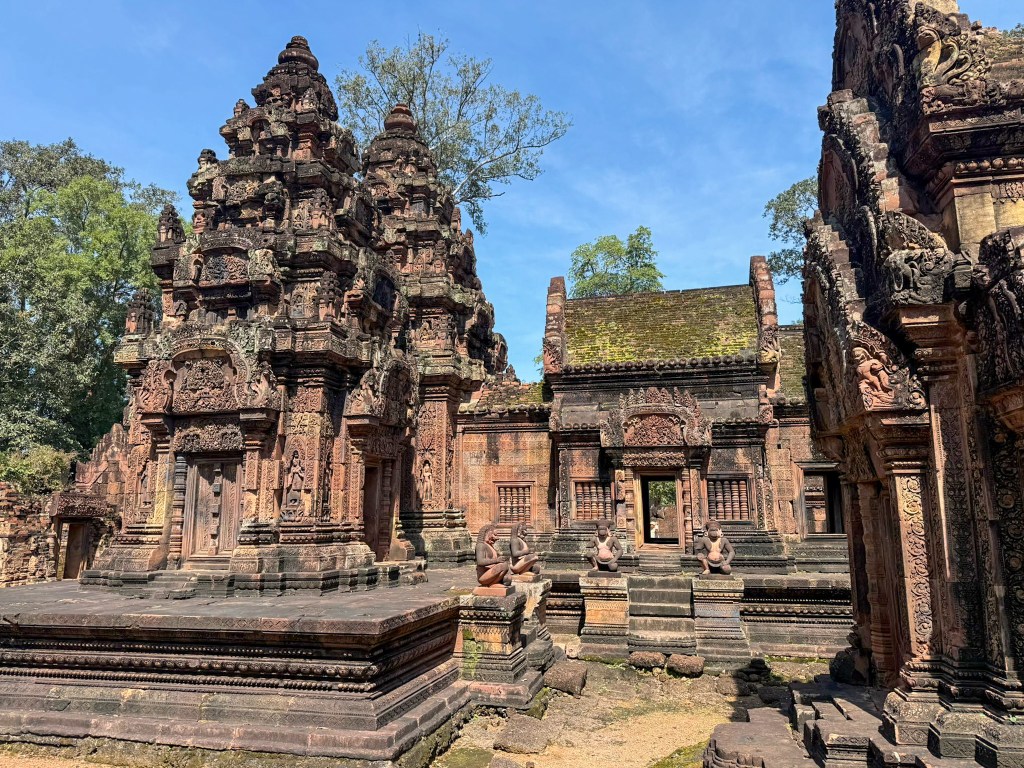
Located 25 km from the main complex, Banteay Srei is smaller yet exquisitely detailed — a masterpiece of Khmer art in pink sandstone, which makes it a little different to the other temples. It also has some nice walking paths with viewpoints which make for a really lovely break from the temples. In total we spent 1.5 hours here.
B. Pre Rup
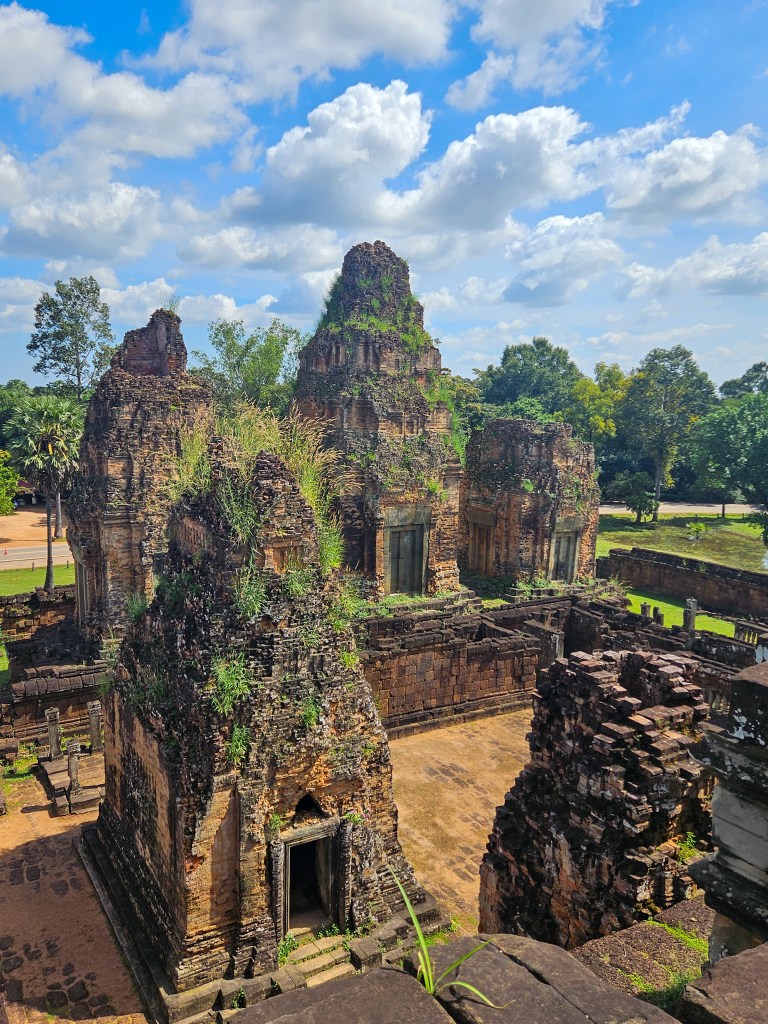
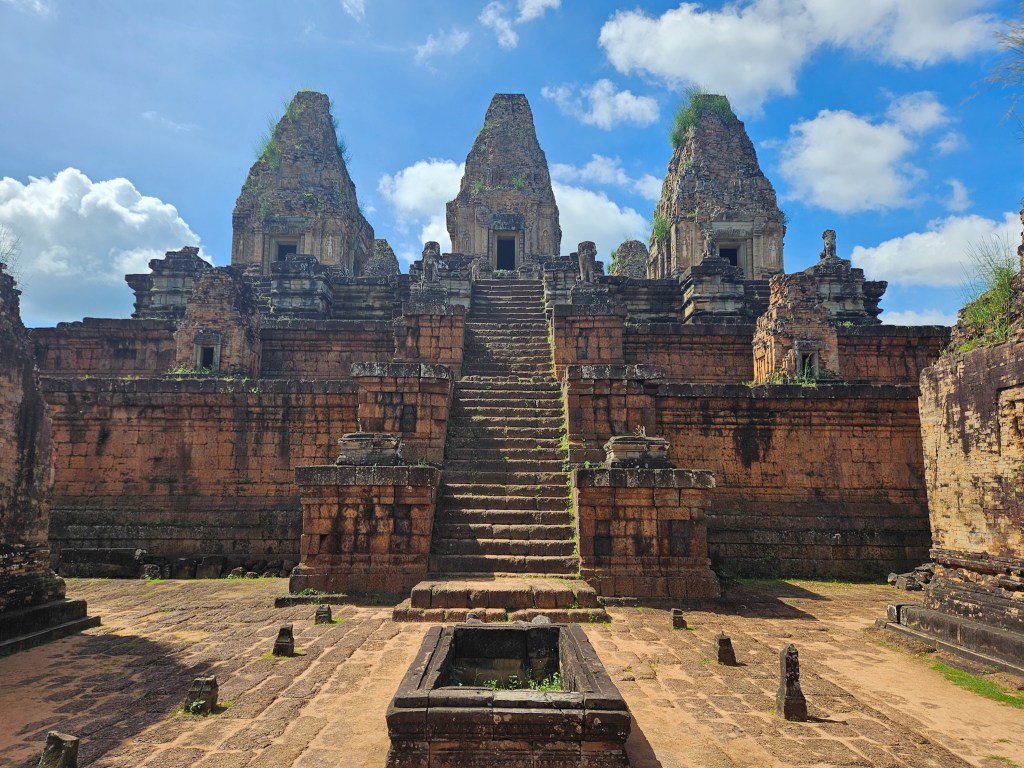
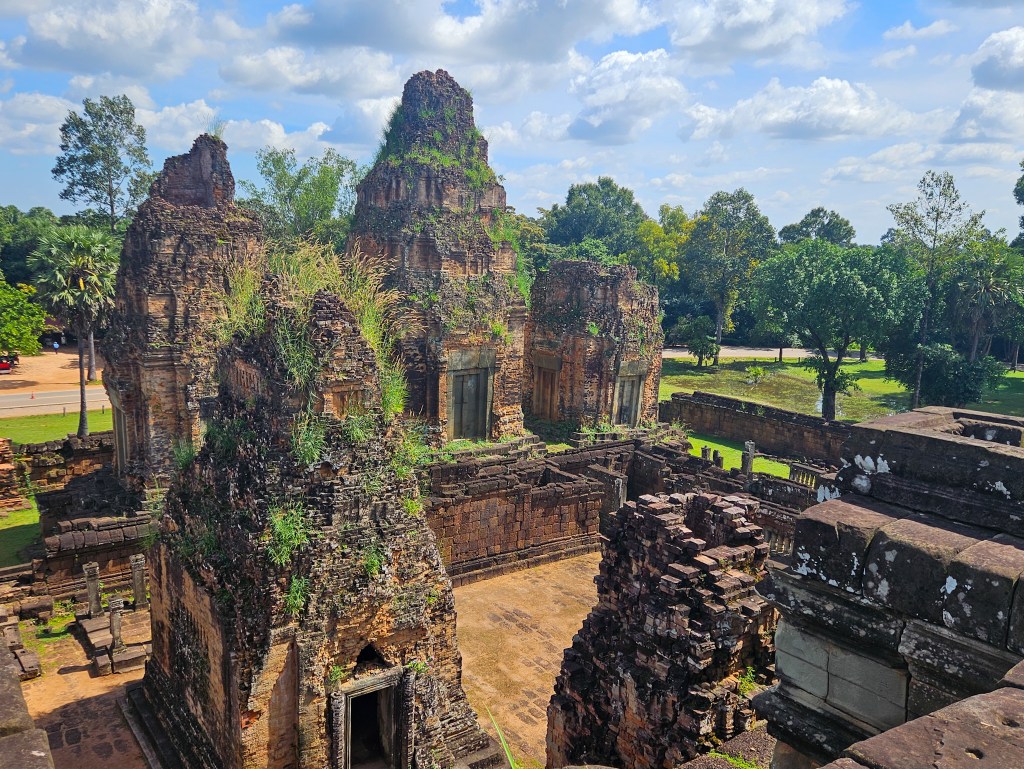
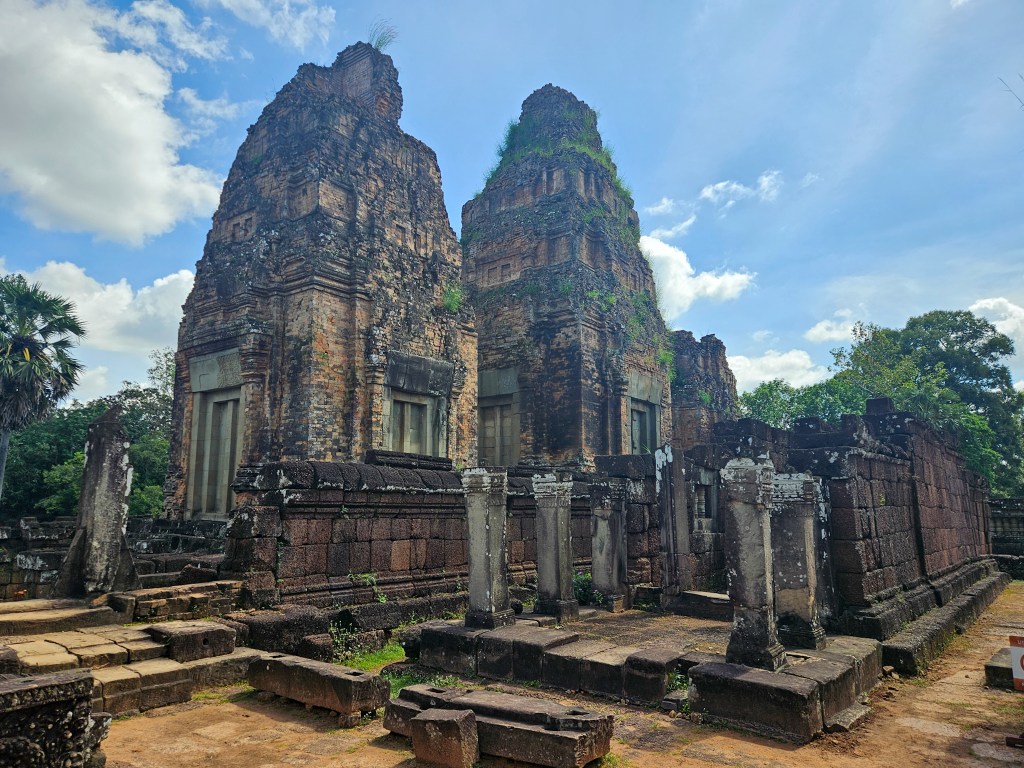
Another one right out of a film set, Pre Rup felt really special. We had it completely to ourselves and wow was it beautiful with its epic towers and atmospheric foliage growing out of them. Another total pinch me moment, and worth 1 hour to take it all in.
C. Ta Som
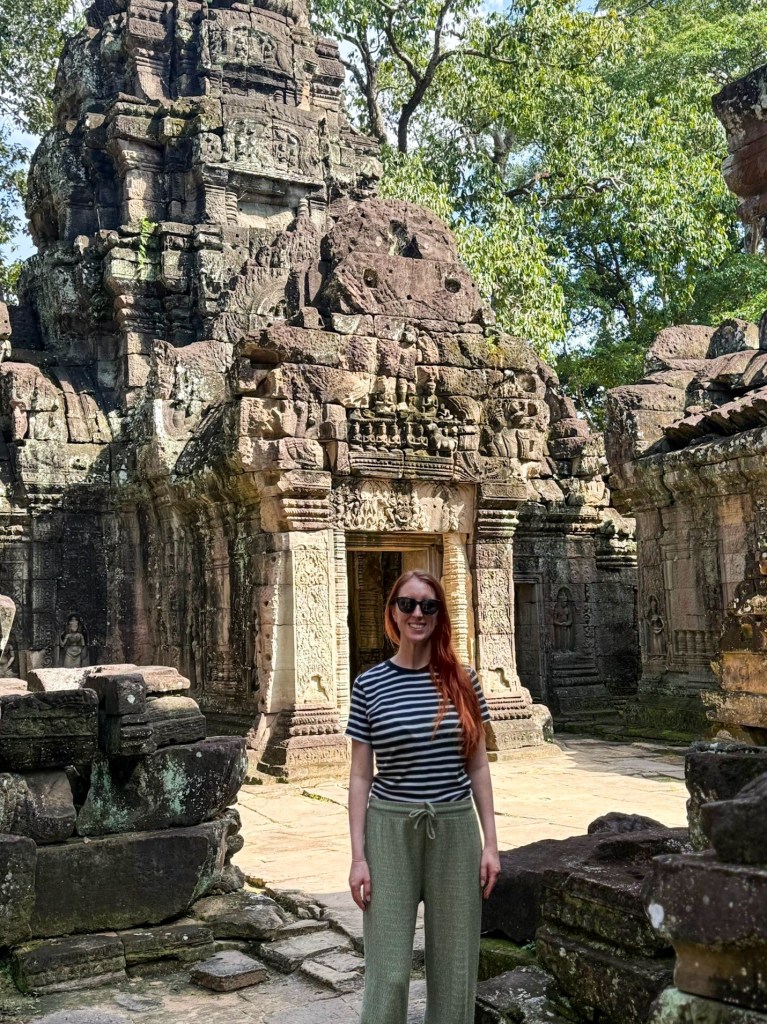
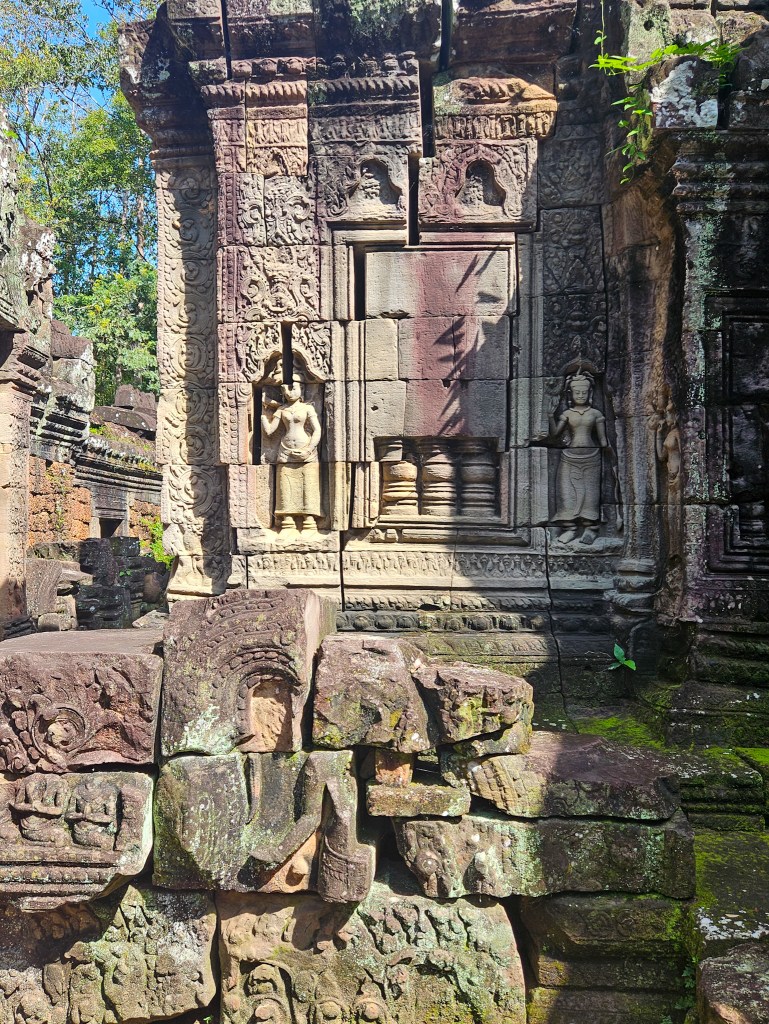
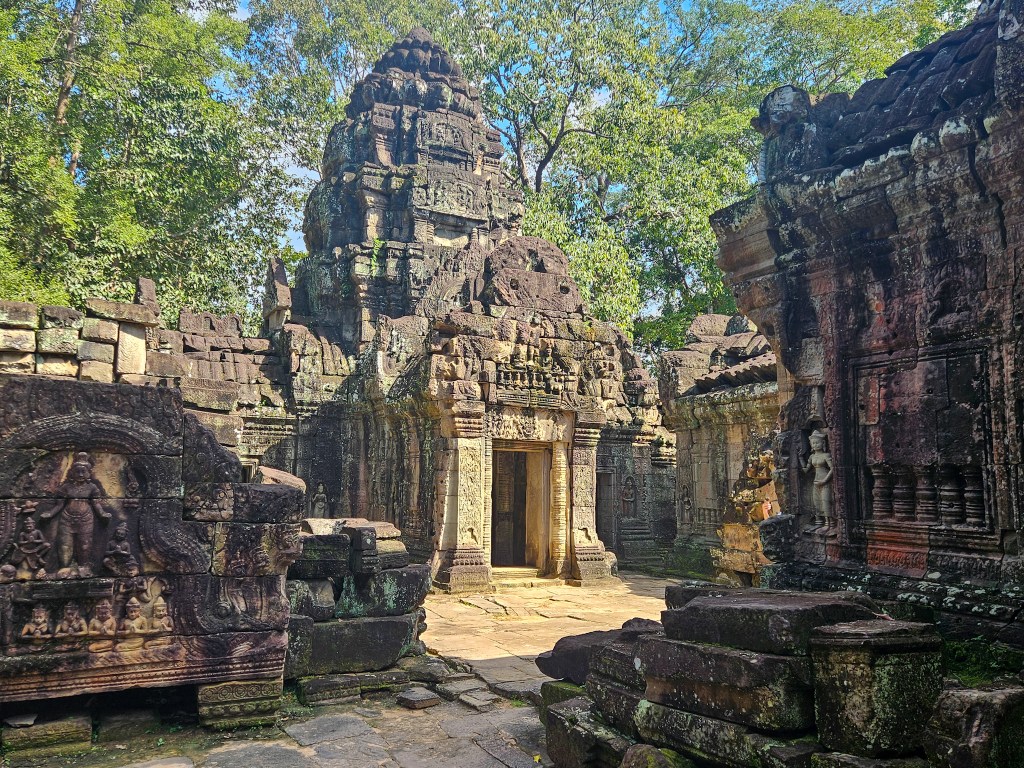
Ta Som is a 12th-century Buddhist temple built during the reign of King Jayavarman VII, one of the most prominent Khmer rulers. It was likely dedicated either to one of his teachers or a close relative, and is built in the Bayon style so has similarities to Ta Prohm. This was another of my favourites, and I spent 1.5 hours exploring.
D. Neak Poan
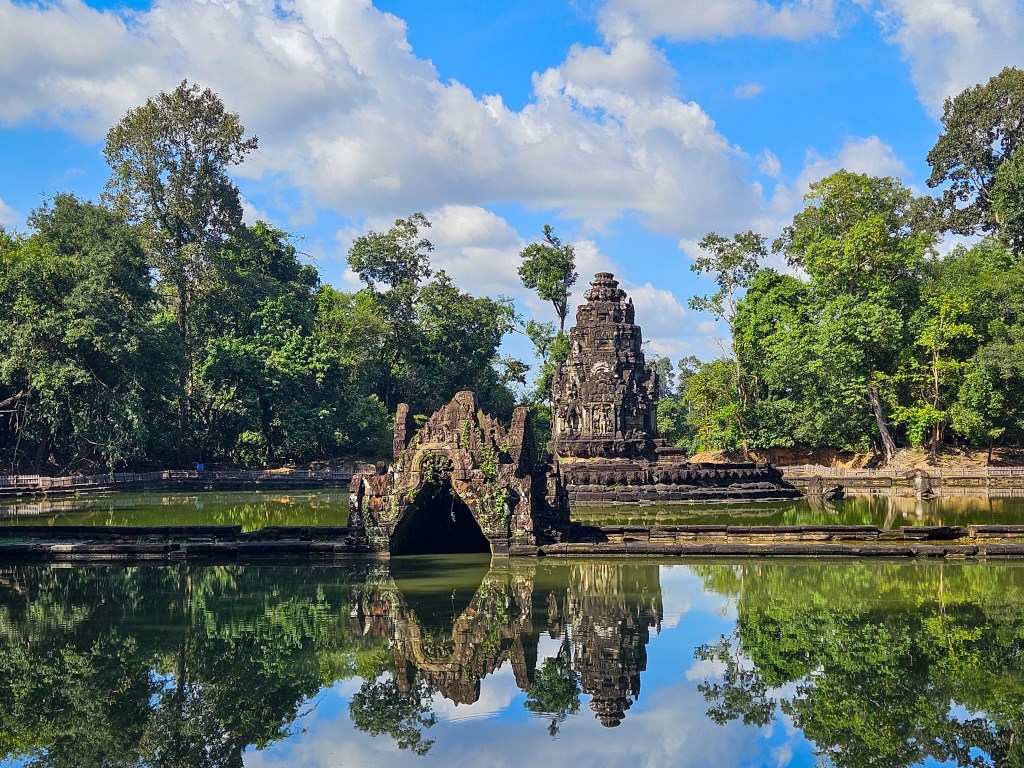
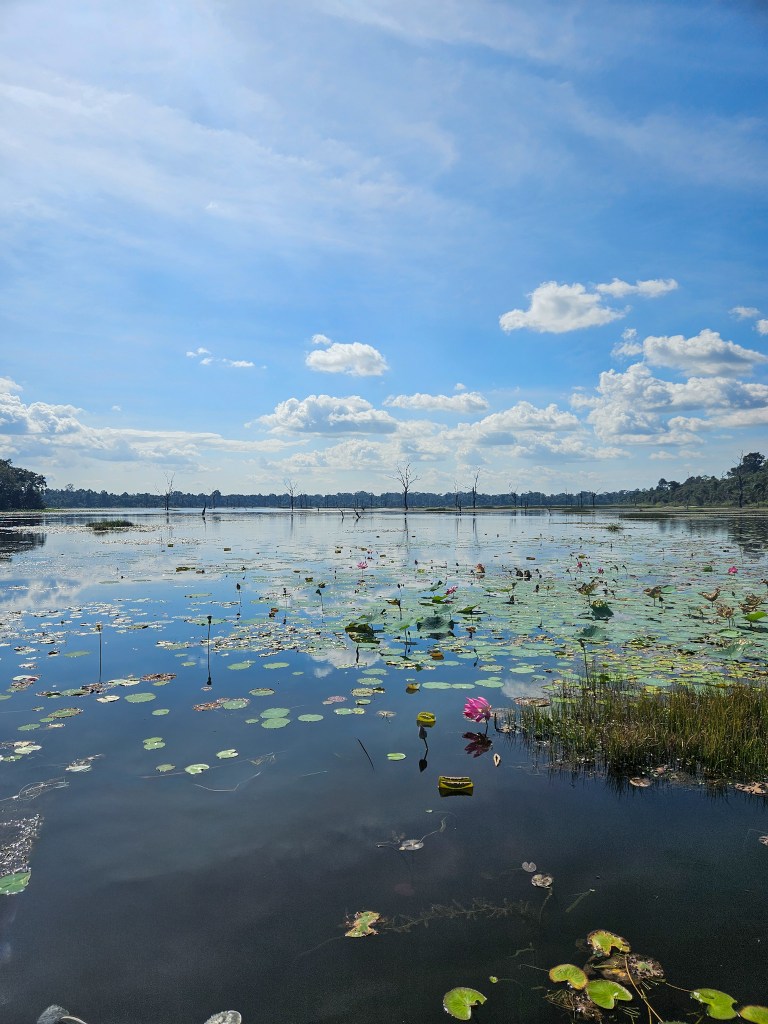
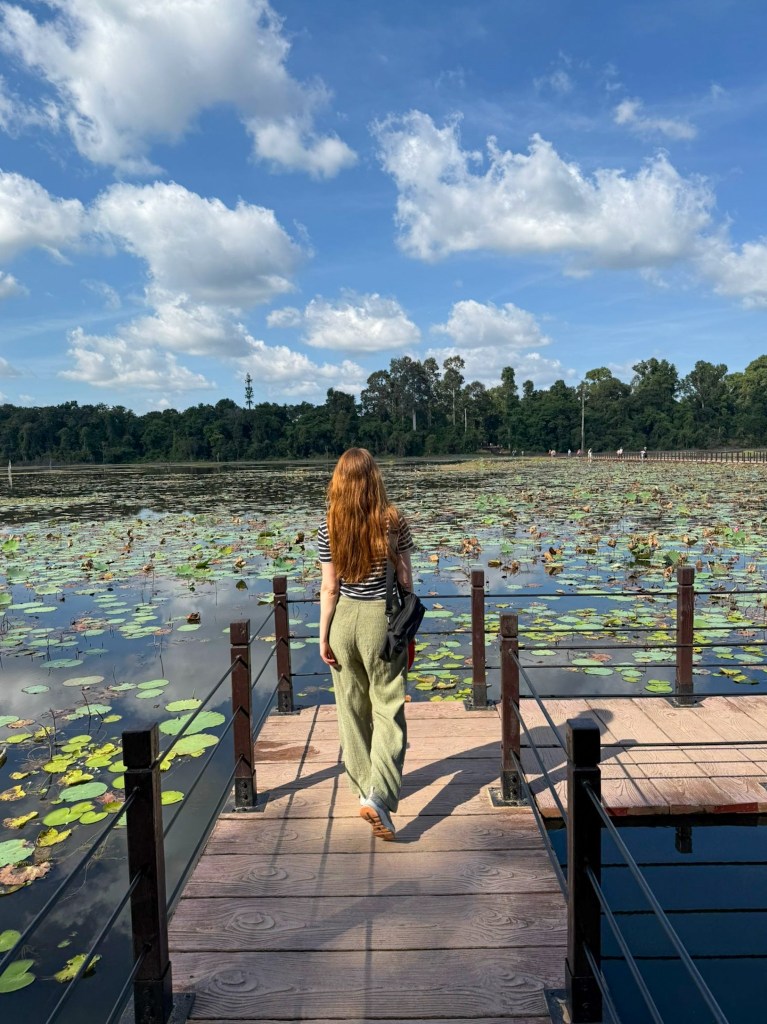
Neak Poan offers something a bit different from the other temples, in that it’s accessed via a boardwalk over the most gorgeous waterlily pond, and the temple itself sits in the middle of the water. This was my husband’s favourite temple and I thought it was amazing too! You can walk around it in around 30 minutes.
E. Preah Khan
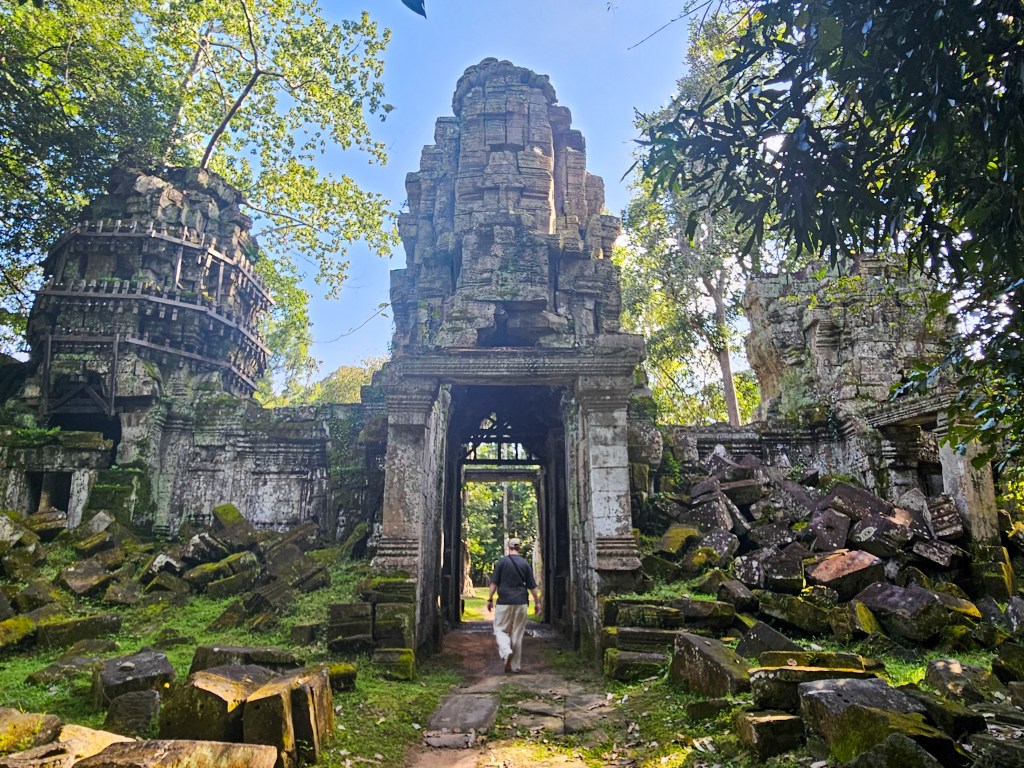
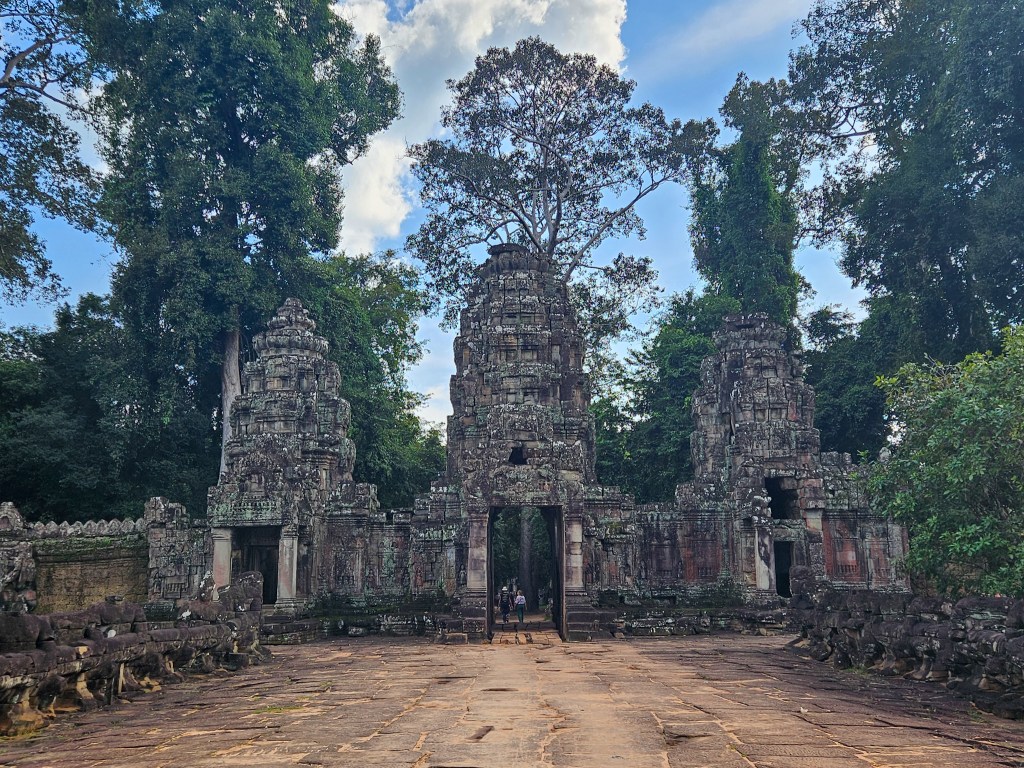
A sprawling complex filled with intricate corridors and carvings, Preah Khan was virtually empty for us, and is normally less crowded than some of the main temples, but just as fascinating. I loved all the doorways to walk through, and the site was really big. A perfect way to finish up Day 2, even though we got lost twice! Again, the temple took us around 1 hour to explore.
Day 3: The Roluos Group
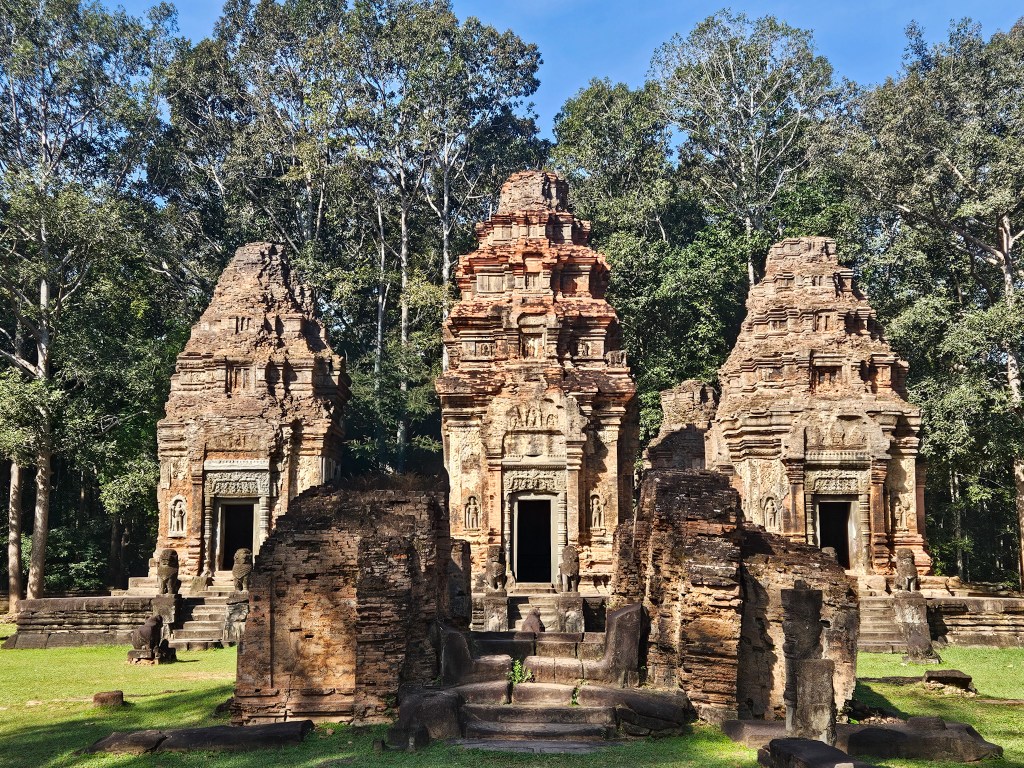
The Roluos group is a set of temples around 13km east of Siem Reap. It was once the seat of Hariharalaya, the first capital of the Khmer Empire. Among the Roluos group of temples are some of the earliest permanent structures built by the Khmer polities. They mark the beginning of classical period of Khmer civilization, dating from the late 9th century. There are 3 main temples in the group, which will take around 2-3 hours to visit in total.
A. Preah Ko
One of my favourite temples to explore, Preah ko is dedicated to the Bull of Shiva, so has wonderful bull sculptures everywhere. I loved the sandstone columns and ornate carvings around the doorways.
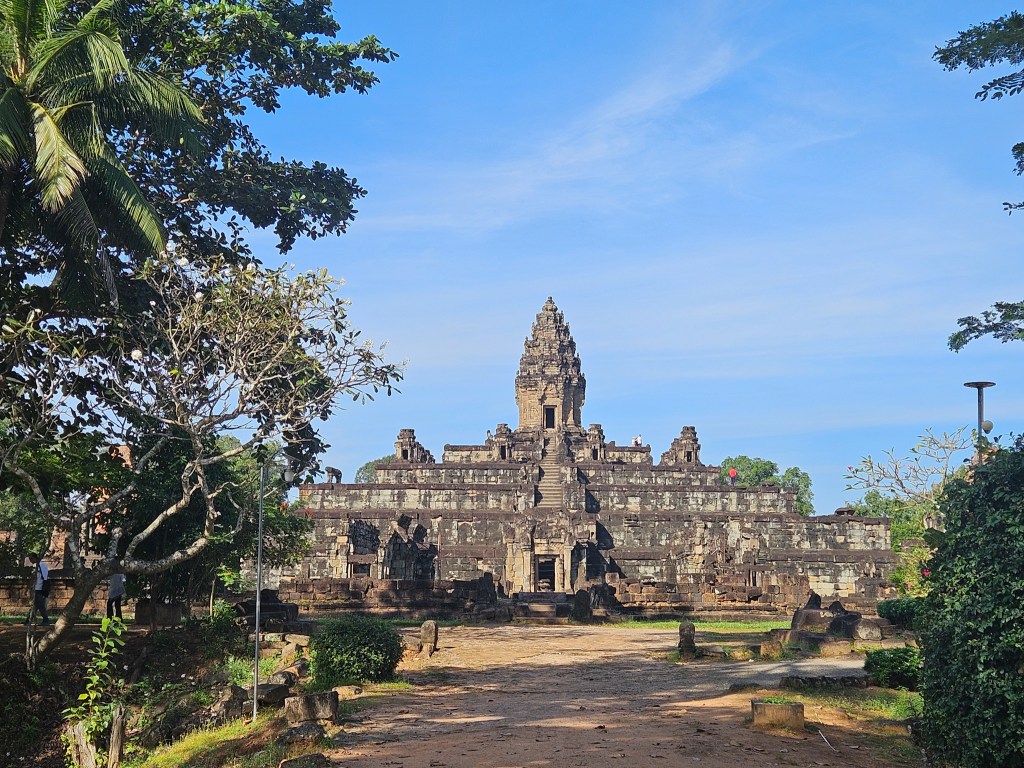
B. Bakong
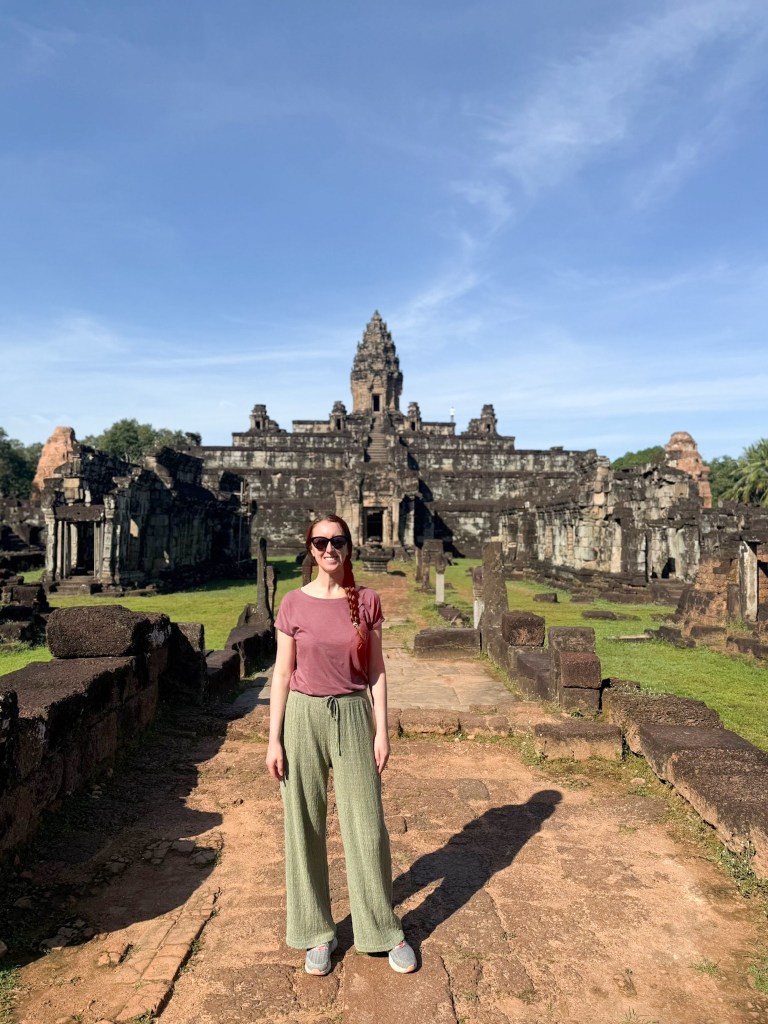
Another highlight was Bakong, which is surrounded by super cute elephant statues. It’s so cool to climb to the top, and again we had it all to ourselves.
C. Lolei
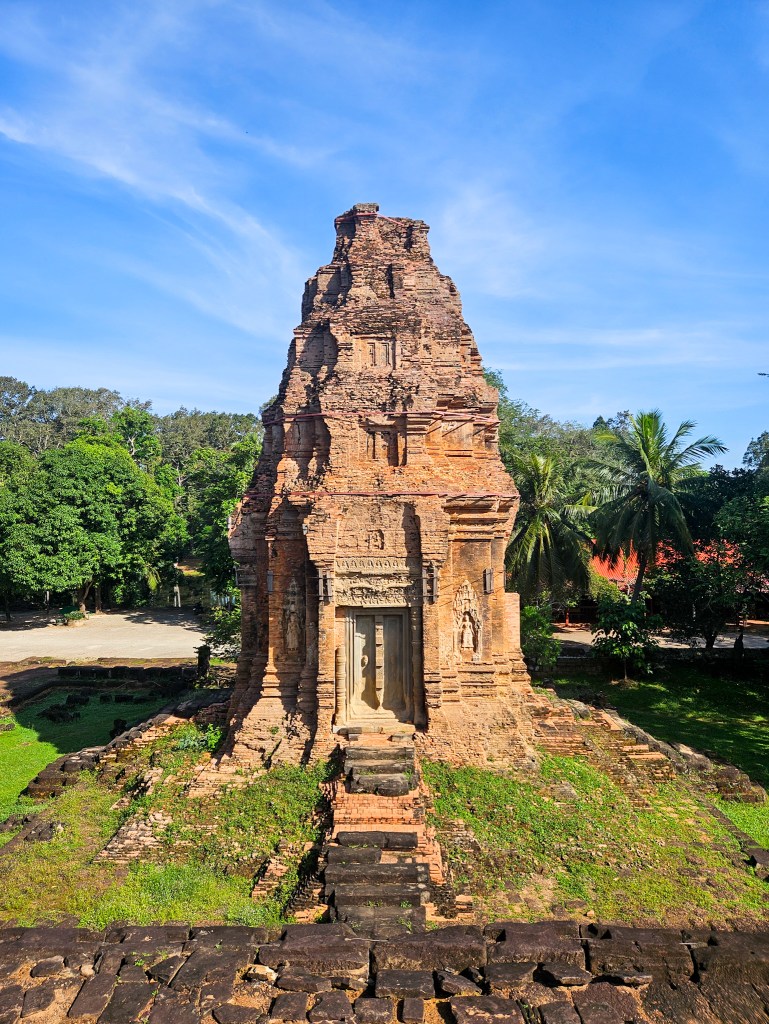
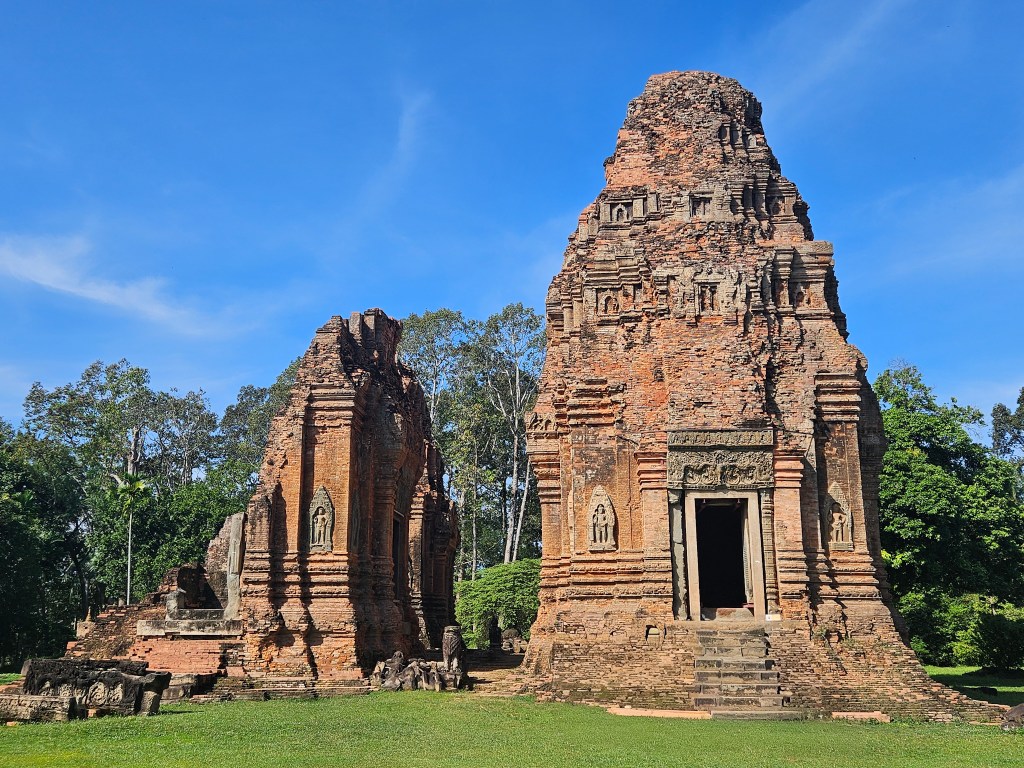
One of the smallest temples we visited, and is dedicated to the ancestors of the King who built it. Interestingly, it used to be an island temple, but the lake has long dried up.
Other Temples
The above are just the temples I think from my visit are well worth including in a medium-paced 3 Day Itinerary. There are dozens of other options, and I’ve highlighted a few I think are worth inclusion if you want more, plus the relevant day to add them to.
A. Palilay Temple (Day 1)
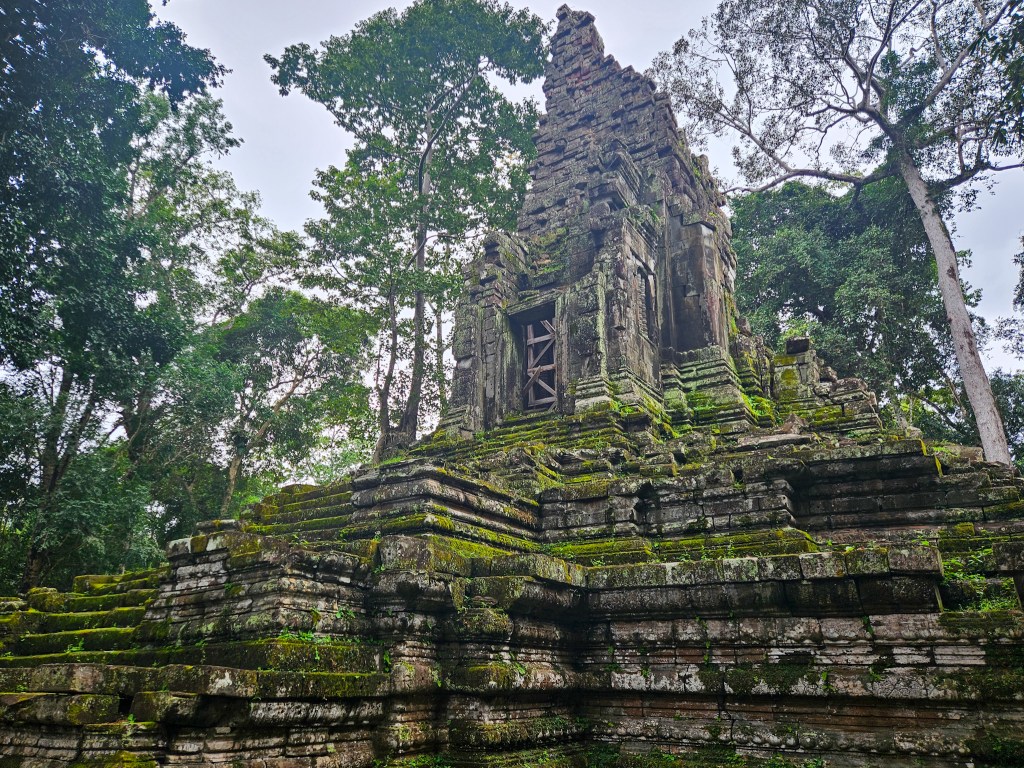
A beautiful little temple which is close to Angkor Thom, Palilay is a lovely quiet and shady respite from any crowds. It was actually one of our favourites, and needs 30 minutes max.
B. Kbal Spean (Day 2 or 3)
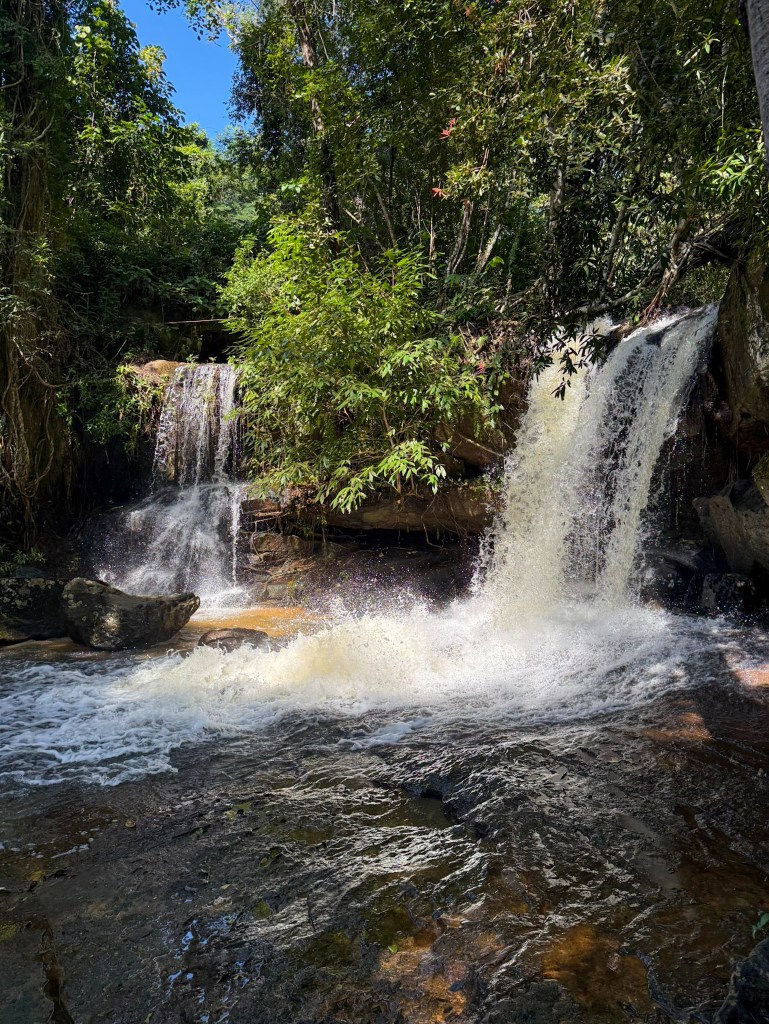
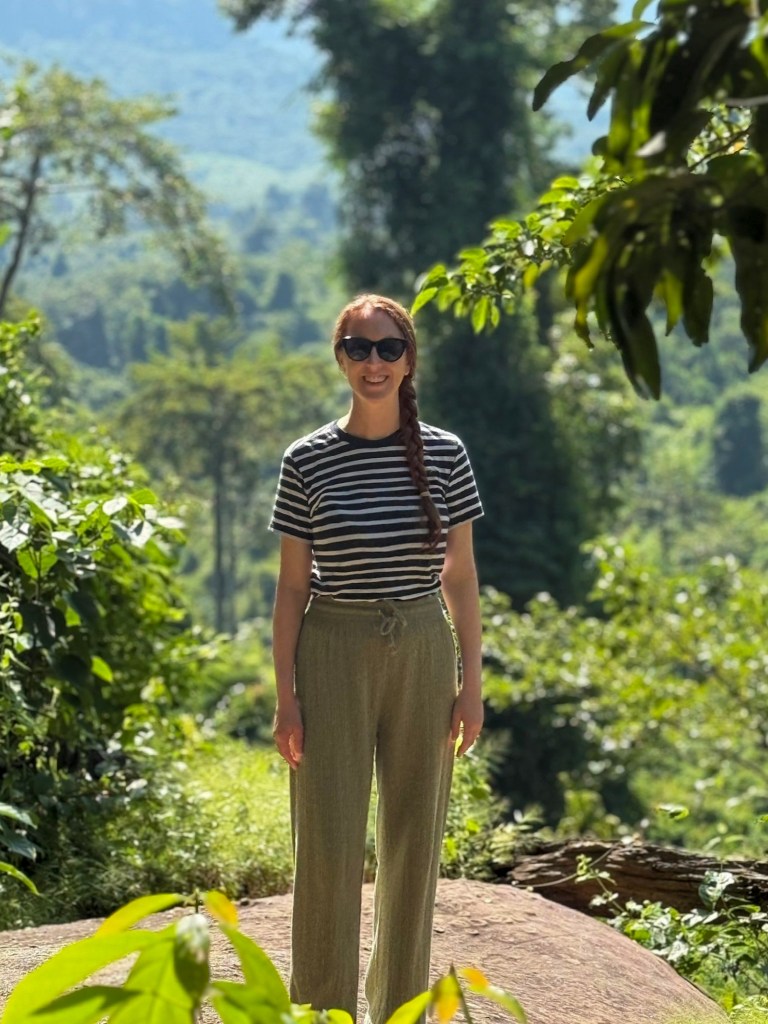
To mix up the temples on Day 2 or 3, you could add in Kbal Spean – a picturesque c.5km hike to some waterfalls within the Park, and home to some ancient carvings. It was truly Indiana Jones, with tree roots, river rapids and stunning greenery everywhere. This will need 2 hours.
You can read my full guide to the Kbal Spean hike HERE (post coming soon).
C. Banteay Kdei & Srah Srang (Day 1)
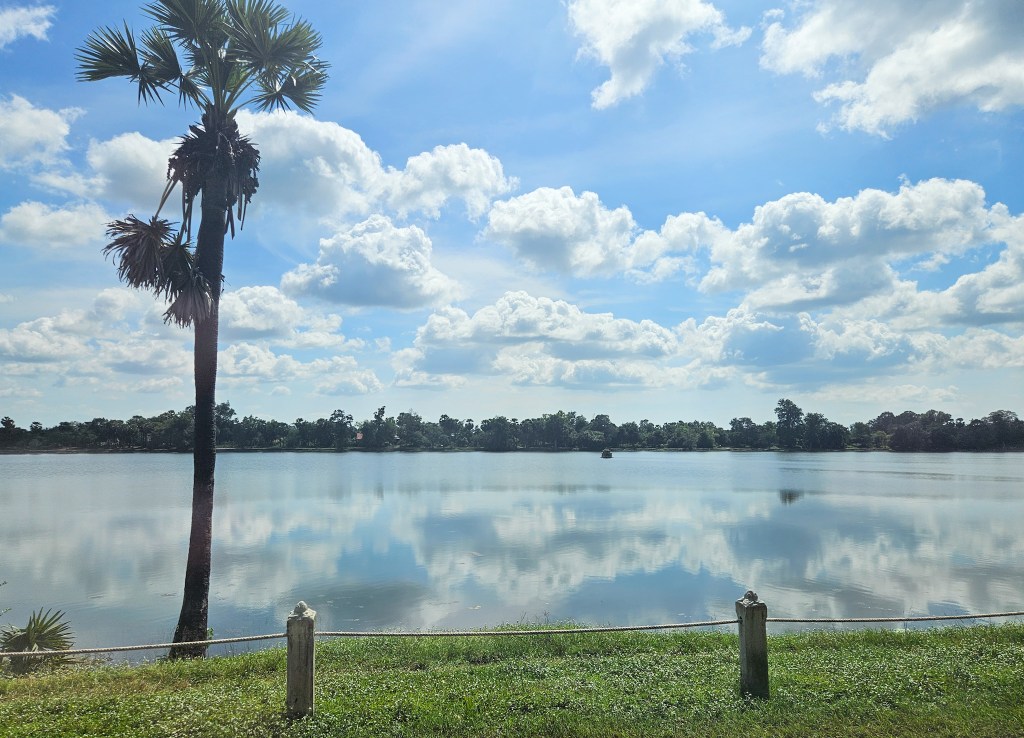
Banteay Kdei is a mid-sized Buddhist monastic complex located just west of Srah Srang in the Angkor Archaeological Park. It is one of the quieter, more atmospheric temples — a little worn, a little overgrown, and wonderfully peaceful. Srah Srang is a large, man-made reservoir, known as the Royal Bath, which has some lovely views all around and is perfect for sunset.
D. Other
There were many other temples we had planned to visit, but just didn’t have time to fit in. There is so much to see and do in Angkor and you could easily spend an entire week and not see everything. Some of the main ones we missed include:
- East Mebon
- Prasat Chau Say Tevoda
- Phnom Bekheng
Final Travel Tips for Angkor
- Dress respectfully: Shoulders and knees must be covered at all temples.
- Start early: Beat the crowds and heat by beginning at sunrise.
- Stay hydrated: Bring a refillable water bottle — it gets hot!
- Hire a guide: A local guide ($15–25/day) brings the temples’ stories to life.
- Respect the site: No climbing on ruins or touching carvings.
And that brings to a close my mammoth post on Angkor Archaeological Park. I hope my love of this incredible place has come through in the post and that this is a helpful guide if you’re planning a trip. This was probably my favourite post of all time to write and just reading it all back makes me smile from ear to ear.
Angkor is more than a destination — it’s a journey through history, spirituality, and timeless beauty. Whether you spend one day or one week exploring its sacred stones, you’ll leave with a deep appreciation for Cambodia’s cultural soul. So pack your camera, your curiosity, and a sense of wonder; you won’t be disappointed.
Stay safe and happy travelling!


 Travelling Han
Leave a comment