After a week in Central Vietnam with typhoons meaning we could only leave our hotel twice, it was time to escape South to HCMC. After a VERY turbulent flight through the storms, we landed in the beautiful sunshine of south Vietnam. It was odd to be wearing dresses and shorts and not raincoats and fleeces!
Before heading to HCMC, I was warned that the city was chaotic. I was told traffic is horrific, the airport is carnage, and scams are rife. Despite this, I included it in our itinerary because it had so many interesting things to see and do. I am SO glad we did. HCMC was one of the absolute highlights of our entire month long trip, and it definitely stole a bit of my heart. I did find the city to be mad, and it does require chaos management – BUT it was beautiful, historic, clean, interesting and full of amazing food.
So, here are all of my hints, tips and a recommended itinerary to make the most of a visit to this wonderful city.


Contents
- Contents
- Itinerary Day 1: History, Culture & Classic Saigon
- Itinerary Day 2: Local Neighbourhoods
- Have a little longer?
- Important Visitor Tips for visiting HCMC

Itinerary Day 1: History, Culture & Classic Saigon
Saigon Old Town
Start your day strolling Saigon’s historic Old Town, full of Colonial relics from when the city was under French control (from the late 1880s through to the end of WW2 in 1945 – with a short period of Japanese occupation during WW2). Make sure you visit:
- Saigon Opera House – a beautiful ornate building, where you’ll probably see a bride or two having wedding photos taken.
- Notre Dame Cathedral – the famous cathedral which is beautiful inside and out.
- Central Post Office – a gorgeous building which is still a post office. Make sure you go inside to see the hand painted wall maps and stunning foyer.
- Dong Khoi Street – a historic thoroughfare, famous for its colonial-era architecture and upscale shopping.
- Nguyen Hue Walking Street – a lovely picturesque street which is happily pedestrian only.
- Book Street – my absolute favourite. This place was heaven to me.
- Apartment Café Building – it’s Insta famous so be prepared for lots of selfie wielding around you, but it’s still worth a visit.


Independence Palace
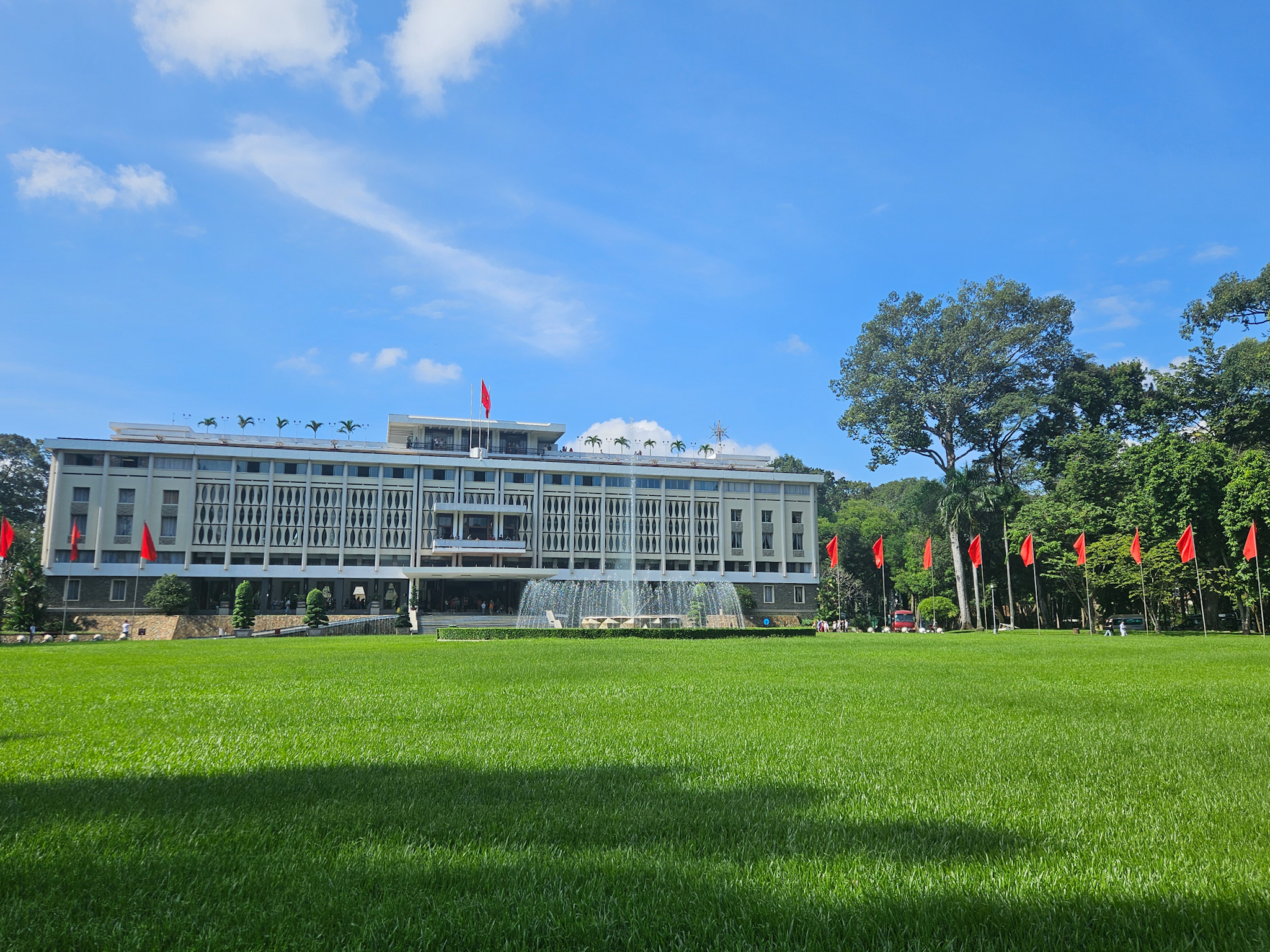
If you want an initial overview of Vietnam’s recent turbulent history, then Independence Palace, located in the heart of Ho Chi Minh City, is one of Vietnam’s most historically significant landmarks.
The original building was built by the French as Norodom Palace during Colonial times. After the French left for good in the 1950s, Vietnam was divided in to two countries. The North (which was communist), and The South (which was ruled by a President, with the support of the American government).
The Palace served as the home and workplace of the President of South Vietnam during the Vietnam War, which was fought during the 1960s and 1970s between North and South Vietnam and its ally, America. After a long and very bloody war, The Palace became the site of the war’s symbolic end in 1975. On April 30, 1975, a North Vietnamese tank crashed through the palace gates and the South Vietnamese president surrendered shortly afterwards. Since then, Vietnam has been one Communist country.
Today, the Palace has been preserved much as it was in 1975, with original furniture, communication rooms, and the president’s private quarters intact. Visitors can explore its command bunkers, war rooms, and the rooftop helipad, offering a unique glimpse into Vietnam’s wartime history and political past. We spent 3 hours here.


War Remnants Museum
It is rare I cry at a Museum. It’s even more rare I have to walk out and literally sob in the courtyard. But this got me, and got me good. I had limited knowledge of the Vietnam War, and anyone visiting HCMC who wants to educate themselves will learn a lot.
Inside, there are entire galleries of haunting images – I won’t describe them, but some were enough to make me physically wretch. I also learned so many moving things from the exhibitions, including volumes of bombs dropped, the use of Agent Orange, and numerous massacres committed.
Ultimately, war is complex and layered. Many civilians in HCMC still remember the war, and/or had family fighting on both sides. I think it’s fair to say that ideologies are still mixed here, and feelings are complex. Regardless, all sides suffered, and family histories here often include deep scars. The museum was heavy going, so please be prepared and be respectful.


Rooftop Bars & Food
HCMC is an amazing city for eating and drinking your way around. After a museum heavy day, spend the evening either going on a food tour, or by exploring some of the best spots independently. I recommend any of the following:
- For a taste of the city’s nightlife, head to a rooftop bar like Saigon Saigon Rooftop Bar, Song Bar or Chill Sky Bar for city views and cocktails.
- Head to Bến Thành Market, one of the city’s oldest and busiest markets. Grab a bowl of phở or bún thịt nướng at one of the food counters.
- Try Bún Chả 145 Bùi Viện for Hanoi-style grilled pork noodles or Hu Tieu Hong Phat, a beloved spot for Saigon-style noodle soup.
- Head to Mặn Mòi, Tao Đàn for a beautifully aesthetic restaurant serving traditional Vietnamese food.


Itinerary Day 2: Local Neighbourhoods
Tan Dinh
Start Day 2 off still fairly central to Saigon, by hitting the area of the city known as Tan Dinh. I tried a Vietnamese Coffee (I recommend Cong Café or Oromia Coffee) for a relaxed start to the day – I don’t normally drink coffee but I have to say it was tasty! Then head to the famous attractions in the area, including:
- Tân Định Church (the Pink Church) – the iconic bubblegum-pink French Gothic church, a major Instagram spot.
- Tân Định Market – a local market for textiles, produce, and great street food.
- Hai Bà Trưng Street – known for good food (especially phở), coffee shops, and small boutiques.
- If you’re hungry, you could also try some local eats, such as Phở Phú Vương (25 Hoàng Sa) – one of Saigon’s best phở spots, or Bún Thịt Nướng Hai Bà Trưng – serving classic grilled pork noodles.


Jade Emperor Pagoda
The Pagoda was built in 1909 by Cantonese immigrants living in Saigon, and was originally dedicated to the Taoist Jade Emperor. Later, the pagoda also absorbed Buddhist influences, so today it’s a blend of Taoist and Buddhist worship, and is still an active place of worship so please be respectful.


Cholon (Chinatown)
As a final area of HCMC to explore, I recommend spending the afternoon in Cholon. This area has a totally different vibe, feeling a little more authentic, and layered with history. I recommend checking out:
- Binh Tay Market – it even has a street food section just behind it.
- Thien Hau Temple – a beautiful temple dedicated to the Goddess of the Sea; well worth visiting.
- Nghia An Assembly Hall – a grand assembly hall built by the Chinese.
- Quan Âm Pagoda – another beautiful spot for photography.
- Cafe Vot – for a traditional “sock-filter” coffee!


Saigon River Cruise
To finish off your trip, an evening sunset cruise along the Saigon river is just perfect. We enjoyed a cocktail cruise, watching the sun set and all the lights along the river come on. A perfect ending to a wonderful time in an incredible city.


Have a little longer?
If you have an extra day then I really recommend a day trip. There are a few on offer, including a boat trip along the Mekong Delta, relaxing on Vung Tau Beach or visiting the Cu Chi War Tunnels.
We chose Cu Chi War Tunnels trip, and had a wonderful day out. We took a speedboat down the river to visit the tunnels which were used by the Viet Kong (Vietnamese Communists) during the Vietnam War. The visit was so interesting and informative and I’d recommend it to anyone spending time in the city.
You can read my full guide to the Cu Chi War Tunnels HERE.


Important Visitor Tips for visiting HCMC
Crossing the Road
- The traffic here is hectic. Whilst a number of roads in District 1 do have crossings controlled by lights (green/red lights), many don’t.
- Where there is a zebra crossing but no green/red lights, the cars and scooters do not stop. Instead, wait for a good time to step in to the road and then just walk at a stable, reasonable pace and the traffic will move around you.
- There are plenty of videos on YouTube which I recommend watching. We were apprehensive the first time, but by the end were just walking in to roads left and right! My husband actually said he enjoyed the challenge.
- Please also note, when roads are busy the scooters just drive up on the pavement (sidewalk). We often experienced scooters coming at us, along pavements already clogged up with street vendors and seats. It was total chaos at points.


Scams
HCMC has a rapidly growing economy, but there are still many people who live in challenging conditions. It’s totally normal that many chance it to make additional money, plus there are a few more advanced scams to be aware of.
- Taxis: At the airport don’t be siphoned off to a taxi, unless it’s in an official rank. Even better, use the local taxi app, Grab. There are designated pick up points at arrivals, and we paid £3 to get from the airport to HCMC. We can see online some people who have followed people at the airport and have been charged in excess of £100.
- Individual Touts: There are many people in the street who will come up and put bracelets on you, or try to get you to carry coconuts, or insist on cleaning your shoes – and then try to charge you. A firm “no thank you” was enough for them to walk away and not keep trying.
- Rickshaws: People were constantly offering us Rickshaw rides, but often they quote a price then say you misunderstood and charge more at the end. Again a firm no meant we were left alone.
- Phone/Petty Theft: This is an issue in HCMC; the bikes swoop up and grab phones as people are walking. We didn’t see this happen, and didn’t experience it, but I can see how easy it would be so please be cautious.


Other – Heat, Cash and HCMC Airport
- Heat: Do not mess with it. The UV here is dangerous so always have sun screen on, and be aware that you won’t be able to walk all day in 35-40 degree heat. Build in some indoor down time.
- Cash: Most places in the city accept card, but if you intend to visit local markets, I recommend having some cash on you. You can exchange GBP, EUR and USD for Vietnamese Dong fairly easily (just be prepared as some exchanges are less than reputable and will short change), and there are multiple global cash points too.
- Airport: We have seen many people complain that HCMC airport is awful, with immigration lines on both arrival and departure 3+ hours long. Many websites sell fast track tickets at a cost. This may be true, but was NOT our experience. We were about 30 mins on arrival, and we got from check-in to our gate in 20 minutes on departure.

Where to Stay
We chose to stay in the amazing Hilton Saigon. We were upgraded to a suite and it was one of the best city centre hotels we’ve ever stayed in. I can’t recommend it highly enough.
You can read my full review of the Hilton Saigon HERE.


And that’s a wrap on Ho Chi Minh City! What do you think of this mega metropolis? We loved our time here and are so glad we chose to include it on our itinerary – we saw and learned so much, and would absolutely recommend a visit to anyone coming to Vietnam. Just take your time and this city has so much to offer.
Stay safe and happy travelling!


Leave a Reply to RebeccaCancel reply