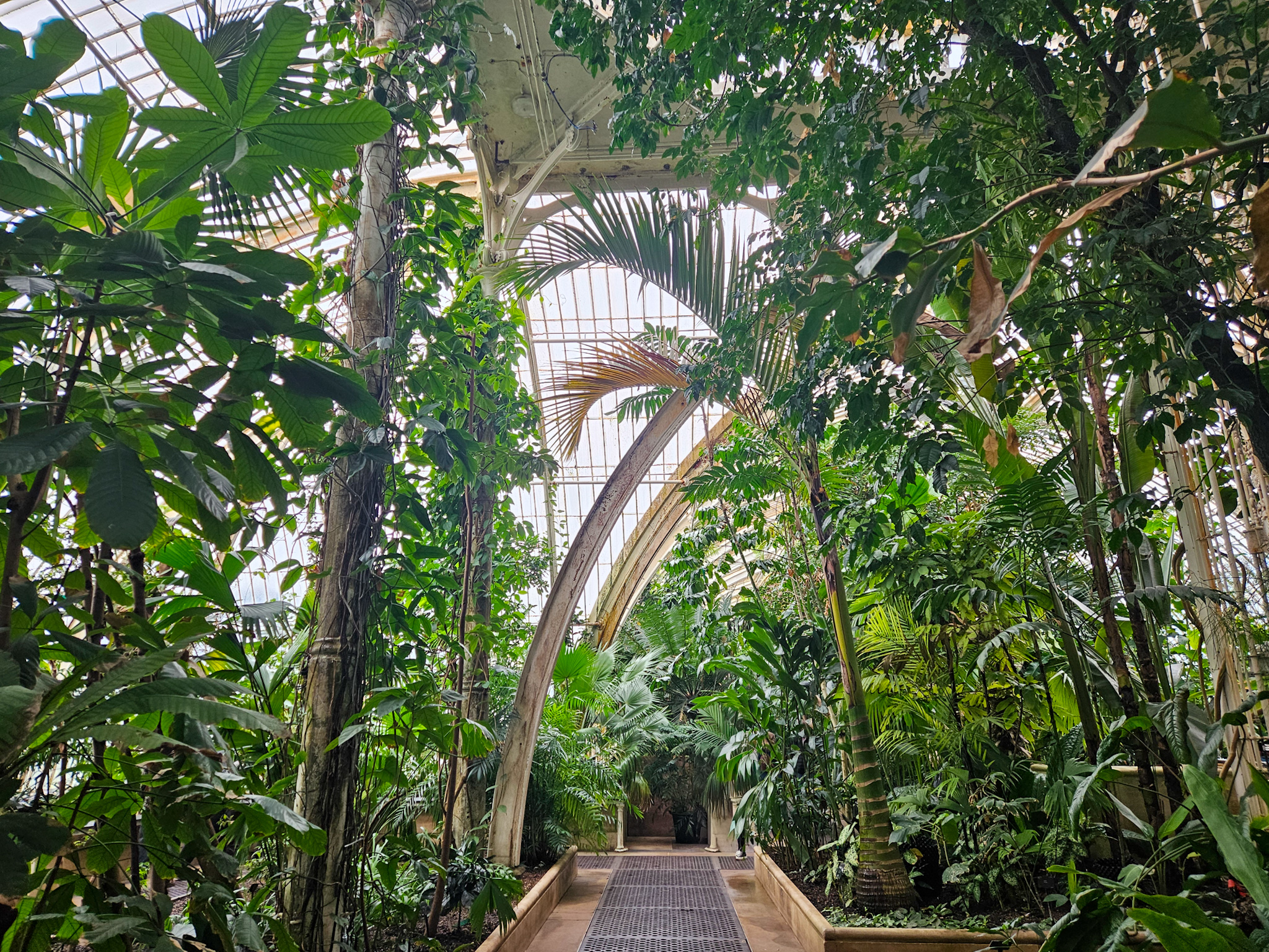
The first of my London day trips this year was in April, as Spring started to emerge. If you follow this blog regularly, you’ll all be unsurprised to hear it was to a garden. Located in southwest London, the Royal Botanic Gardens, Kew (often just called “Kew Gardens”) is one of the world’s most famous botanical gardens and a UNESCO World Heritage Site. With over 300 acres of gardens, historic glasshouses, rare plants, and scenic walks, it’s an ideal place for a half-day or full-day visit.
This Kew Gardens visitor guide covers the best things to see at Kew Gardens in London, including the Palm House, Temperate House, the Treetop Walkway and hidden gems across the historic botanical gardens.
Now as many of you know, I adore Botanic Gardens, and I was so excited for my visit to Kew. I’d had a rubbish week and needed a day alone to clear my head, so I last minute decided to have a change of scene. Now, I have to be really honest and say I didn’t love it as much as I have other Botanic Gardens – I definitely felt Singapore, Kuala Lumpur, Gothenburg and Edinburgh all offered something with a bit more magic. But Kew is still wonderful, and well worth a visit if you’re in London.
Top Tip: If you want to take beautiful photos of delicate flowers, set your camera to portrait mode. Hopefully you like my examples below (shot on my Samsung mobile).
Contents


Important Visitor FAQs for Kew Gardens
How to get to Kew Gardens?
There are 4 entrances to Kew Gardens, depending on where you arrive:
- Victoria Gate
- Pedestrian entrance, closest to Kew Gardens Underground station.
- This is the most convenient entrance point from Central London, via the District Line.
- Elizabeth Gate
- Coach drop off and pedestrian entrance, closest to Kew Bridge overground station and river cruise services.
- Kew Bridge is connected to Central London by taking South West Trains from Waterloo (via Vauxhall and Clapham Junction).
- Taking the Thames River Boat is a great way to make a day out extra special. You can take a service from Westminster Pier to Kew Pier (it’s then a short 10 minute walk to the gardens). It will take 1.5hours but enable you to sightsee down the river on the way so this is perfect for tourists!
- Brentford Gate (TW9 3AF)
- Car park and pedestrian entrance. Parking costs £9 per day.
- Lion Gate
- Pedestrian entrance, closest to Richmond Station (15 minute walk).
Important Note: Parking at Kew is really limited. I drove to the Gardens and arrived for 10am entry, and by 10.30am the car park can be full. I therefore recommend taking the train if you can. It was also a pretty stressful journey through London and I arrived with a bit of my bumper hanging off (I didn’t realise I’d hit anything – oops!).
When is Kew Gardens open, and how long is needed at Kew Gardens?
Kew Gardens is open 10am – 6pm daily, excluding Christmas Day. Most people spend somewhere between 3-5 hours at the gardens, depending on interest.
The minimum time to see the highlights would be 2 hours. It’s also easy to spend an entire day here.


What is the best time to visit Kew Gardens?
Kew Gardens has something to offer across all seasons.
- Spring: Lots of daffodils, beautiful carpets of bluebells, pretty magnolia trees coming in to bloom, and some absolutely stunning cherry blossoms (especially along Cherry Walk in front of the Temperate House).
- Summer: The highlight is the incredible rose garden, plus also the longest herbaceous border in the country is in full swing. Plus the extra special golden-flowered laburnum cascading down the pergola is not to be missed.
- Autumn: Trees are the highlight, with showstopping madenhair trees on Ginkho Lane, and the fiery maples outside the Shirley Sherwood Gallery. There’s also flaming American smokewoods near Victoria Plaza, and Kew’s Japanese Landscape is at its best with bright-red-leaved trees everywhere.
- Winter: Carpets of snowdrops, hellebores, and a diverse offering of pine trees, conifers, bright winter berries, cones and foliage.
Overall recommendation: Late Spring offers the most to see. I went in early spring and saw the last of the daffodils and start of the magnolias. I was too early for the cherry blossoms and rhododendrons, which are the highlight for me.

How much does Kew Gardens cost?
- Adult Peak (1/2 – 31/10): £24 online, £27 at the gate
- Adult Off Peak (1/11 – 31/1): £16 online, £19 at the gate
- Child Peak: £6 online, £8 at the gate
- Child Off Peak: £5 online, £7 at the gate.
There are also discounts for those below the ages of 30, students, concessions and those with access needs. In addition family tickets are on offer to reduce costs. You can see the full list of prices HERE.
Important Tip: There are no lockers or baggage storage facilities available in the Gardens.


Best Things to See and Do at Kew Gardens
The Palm House
There is so much to see and do at Kew Gardens, so let’s get started at one of the most iconic structures at Kew – The Palm House. It’s a Victorian greenhouse, dating from the 1840s, which is home to tropical rainforest plants like bananas and giant palms. Also don’t miss a walk up the spiral staircase to the gallery for a canopy-level view out across all the beautiful plants.
Top Tip: It gets very busy so if you arrive for opening, I recommend coming here straight away to avoid all the crowds!


Princess of Wales Conservatory
Opened in 1987 by Diana, Princess of Wales, this modern glasshouse contains 10 different climate zones. It’s home to a desert house, filled with giant cacti, plus displays of carnivorous plants like Venus flytraps and pitcher plants. There are also tropical pools home to water lilies. This was by far my favourite part of the gardens.
Important Note: Look for the heat warning lights at the desert entrance; temperatures inside can exceed 40°C.


Treetop Walkway
The Treetop Walkway lets you explore the forest canopy 18 metres above the ground. Given I visited in early spring before the trees were blooming, there wasn’t much of a canopy to see, but it would be beautiful in summer and autumn to walk through the oak, chestnut, and lime tree canopies.

Temperate House
The Temperate House is the largest surviving Victorian glasshouse in the world. It displays plants from temperate climates across Africa, Australia, Asia, and the Americas, including many critically endangered species. It is also beautifully restored to a better condition than the Palm House, and again is home to an elevated walkway.


The Great Pagoda & Japanese Landscape
Built in 1762, the Great Pagoda is one of Kew’s historic landmarks. The Pagoda is 10-stories high and inspired by Chinese architecture, surrounded by a beautiful Japanese landscape with rock gardens, gateways and trees native to the region. Visitors can also climb the interior staircase for panoramic views.


Seasonal Gardens & Landscapes
Kew changes dramatically throughout the year, with highlights depending on what time of year you visit. There are specific gardens and areas home to the season’s highlights – the ones listed below are all specifically identified on the Kew Gardens map provided on arrival.
- Spring: Rhododendron Dell, Cherry Walk, Japanese Landscape and Magnolia Grove (along Princess Walk).
- Summer: The Rose Garden, Grass Garden, Duke’s Garden, Chinese Grove, Wild Rose Collection and Wildflower Meadows.
- Autumn: The Arboretum, Redwood Grove, Woodland Garden, Woodland Glade, and Lake Crossing.
- Winter: The Winter Garden, and the famous Christmas at Kew light trail.

Other: Easy to miss Hidden Gems
There are lots more things to see at Kew, so here are a few of my favourite off the beaten track discoveries. Again, all are identified on the visitor map.
- Kew Palace: A small royal residence once used by King George III. It was closed when I visited, but I’d have loved to go in.
- The Hive: A glowing art structure that responds to real beehive activity.
- Marianne North Gallery: Over 800 botanical paintings by Victorian explorer Marianne North. I thought these were quite beautiful.
- Syon Outlook: For some lovely views out to the River Thames.


Special Events
Always check for the special events on during your visit. They run regularly throughout the year and are always worth seeing. There’s an annual Orchid Festival every winter, Sounds of Blossom in partnership with the Royal College of Music in spring, Wine Walks during the summer, and the famous Christmas at Kew.
Obviously I visited for the orchids given they are my favourite plant in the world (apart from maybe an iris), and it was amazing!
Top Tip: Kew also offers a number of unique experiences like Forest Bathing, Planting workshops, Sound Baths, Tai Chi and Yoga. You can check the full list to see what’s on HERE.


Eating and Drinking at Kew Gardens
There are numerous eating options at Kew, though be warned they are all quite pricey so I decided to bring a packed lunch. All of these restaurants are open 10am-5pm but have different serving hours as noted below.
- Family Kitchen & Shop: Hot food served from 11.30am to 3.30pm, including a pizza counter.
- Orangery: Breakfast served from 10am to 11.30am, lunch from 12pm to 3.30pm.
- Pavilion Bar and Grill: Lunch from 12pm, mainly burgers.
- The Botanical Brasserie: Top end and most expensive option; Breakfast 10am to 11am, Lunch 12pm to 3.30pm, Afternoon tea 2pm to 4.45pm.
- Victoria Plaza Café (open until 5.45pm): Snacks, cakes and drinks.

So there you have it, my guide to visiting Kew Gardens. Thanks so much for reading. What did you think? Would you like to visit, or was this helpful for planning your trip? Let me know in the comments below!
Stay safe and happy travelling!


Leave a Reply